

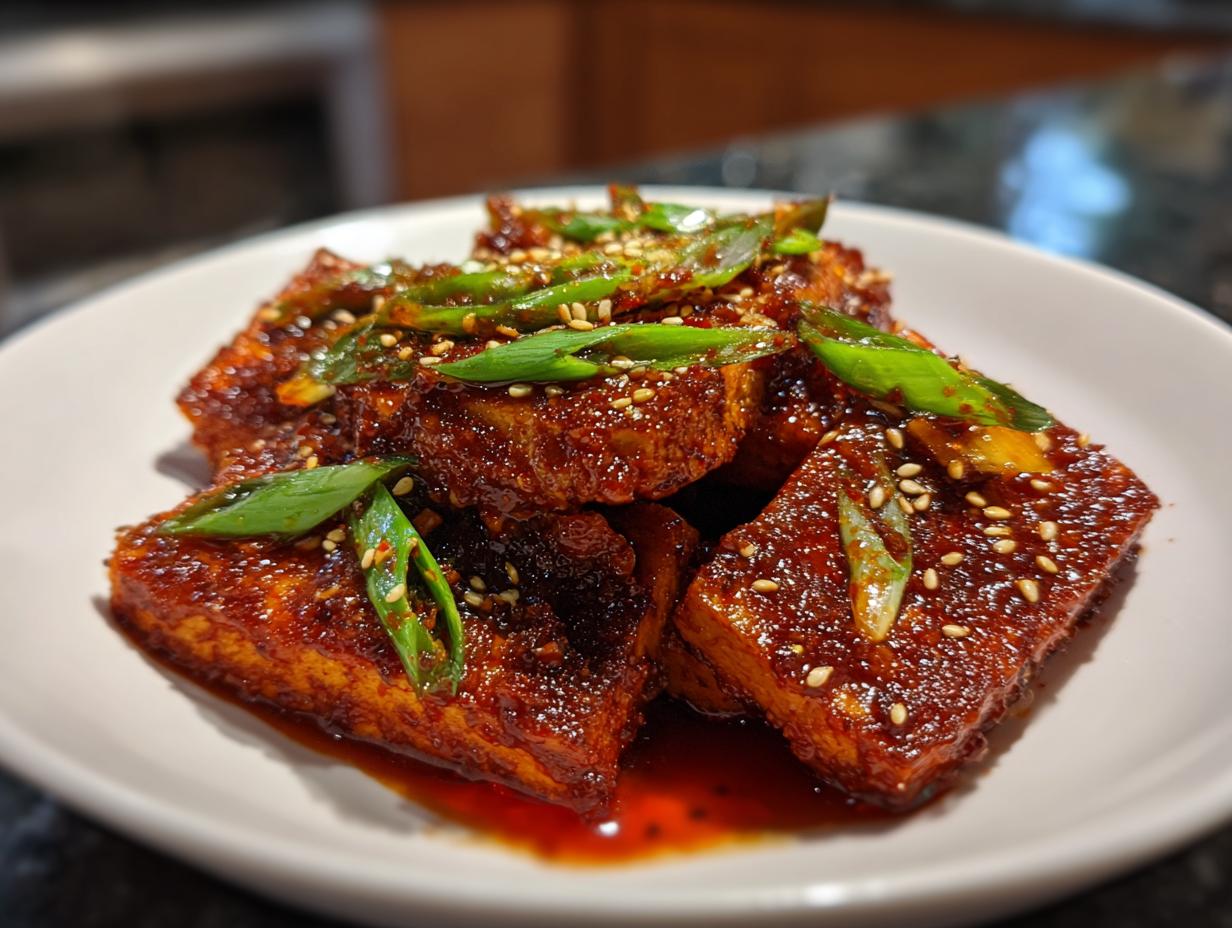
When I think about comfort food, my mind immediately goes to the savory, soul-satisfying side dishes we call banchan. Growing up steeped in the traditions of bigger, bolder American roasts and layered desserts, discovering the quiet depth in simple Korean cooking has been a revelation. And nothing captures that balance of simplicity and intense flavor quite like a perfect pan of korean braised tofu, or Dubu Jorim. Forget complicated techniques; this dish is proof that extraordinary meals don’t require extraordinary effort. My goal here is simple: to share the exact method I use to nail that authentic savory-spicy sauce every single time, making this one of the best easy tofu banchan you’ll ever try. If you’re curious about my journey bridging nutrition science and soulful cooking, you can read more about our story here.
- Why This Korean Braised Tofu Recipe Stands Out
- Essential Korean Pantry Staples for Authentic Korean Braised Tofu
- Step-by-Step Guide: How to Cook Korean Braised Tofu (Dubu Jorim)
- Serving Suggestions for This Traditional Korean Banchan
- Storage and Reheating Tips for Leftover Korean Braised Tofu
- Frequently Asked Questions About Making Dubu Jorim
- Quick Korean Dinner Ideas Featuring Korean Braised Tofu
- Recipe Overview: Times and Yield for Your Korean Braised Tofu
- Share Your Experience Making This Korean Braised Tofu
Why This Korean Braised Tofu Recipe Stands Out
Look, I’ve made plenty of tricky recipes over the years, especially when I was focused on the science side of food. But this dish? It proves you don’t need a million steps for amazing flavor. This particular recipe is my favorite because it focuses on two things that most home cooks struggle with when tackling Dubu Jorim: getting that tofu to hold its shape, and nailing that sauce just right so it’s savory but still has a little kick. It’s honest cooking, folks.
- It’s incredibly fast, making it one of the best homemade Korean side dishes for a busy night.
- We skip boiling the tofu—frying it just a little gives it a wonderful structural integrity needed to hold up to the sauce.
- The sauce is designed to be layered, ensuring every piece gets coated without turning mushy.
- It’s naturally vegetarian, which is just excellent when you’re looking for satisfying protein ideas!
Achieving Perfect Tofu Texture Before Braising
This is where trust in the process comes in. If you skip pressing the tofu, your final product will be watery, and none of that magnificent sauce will cling to it! You absolutely must press that moisture out. I usually wrap my block in a few layers of paper towels and put a heavy cast-iron skillet on top for at least half an hour while I prep everything else.
For extra security—especially if you accidentally grabbed the regular firm instead of extra-firm—try dusting the slices very lightly with cornstarch before they hit the oil. That light coating creates a thin barrier that fries up beautifully crisp. Trust me, that little bit of crispness that survives the braise is what makes the texture in this korean braised tofu legendary!
Balancing the Flavors in Your Korean Braised Tofu Sauce
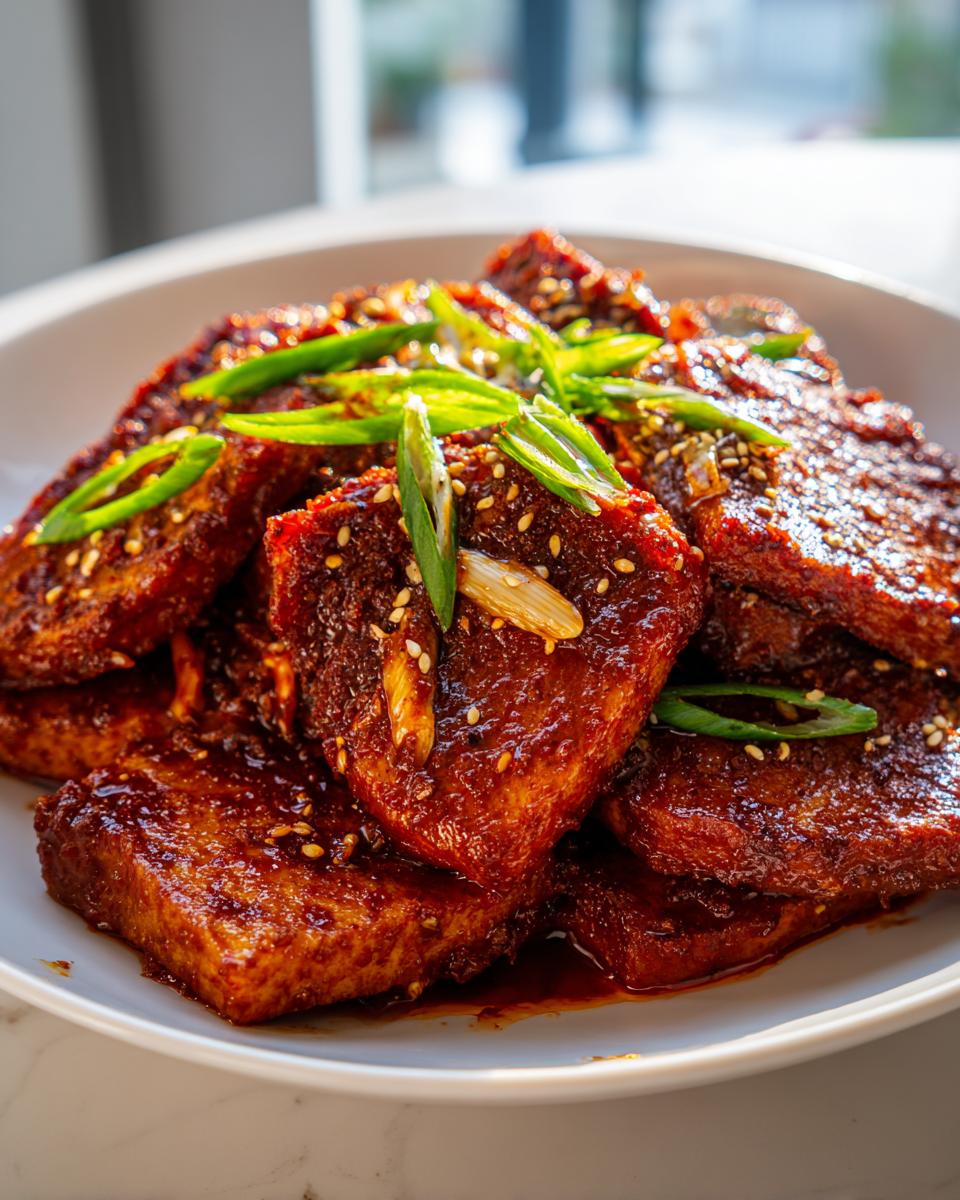
The magic sauce is what separates a sad, salty block of tofu from a show-stopping banchan. We aren’t just dumping soy sauce in here. We need depth, and that comes from the trifecta: spicy gochugaru, funky gochujang, and savory soy sauce. I always mix them first with just a splash of water—not too much!—so I can taste the raw mixture before it hits the pan.
You want the sauce to taste bold because it mellows out when it simmers with the tofu. If it tastes slightly too aggressive when raw, it’ll be absolutely perfect once it has done its job. A tiny bit of sugar balances the heat from the chili paste. That wonderful, complex flavor profile is what transforms simple ingredients into authentic korean braised tofu.
Essential Korean Pantry Staples for Authentic Korean Braised Tofu
If you’re new to Korean cooking, looking at a recipe that calls for two types of chili products can feel a little intimidating! But honestly, these staples are the backbone of so much amazing food, and once you have them, you’ll use them constantly. They’re worth stocking up on because they bring an immediate, deep flavor to this korean braised tofu that water and dried herbs just can’t touch. Think of them as the seasoning equivalent of having good quality olive oil and balsamic vinegar in an Italian kitchen—they just belong!
Here are the must-haves for the sauce we mixed up earlier. You cannot skip these if you want that true Dubu Jorim experience:
- Gochujang (Korean Chili Paste): This paste is thick, sweet, savory, and spicy all at once. It’s fermented, which adds body and character. If you absolutely can’t find it, you might substitute with a mix of miso paste and a little sriracha, but honestly, Gochujang is non-negotiable for the real deal.
- Gochugaru (Korean Chili Flakes): These aren’t your standard dried red pepper flakes! Korean flakes are brighter, often smokier, and less aggressively hot. They bloom beautifully in the sauce, giving the tofu that vibrant orange-red color we want.
- Soy Sauce: I use standard all-purpose soy sauce for the main sauce base, but I use a separate tablespoon to *pre-coat* the tofu before frying (as noted in the steps). This tiny extra layer of saltiness helps shield the tofu a bit during the initial fry, too!
- Sesame Oil: Never cook with this! Sesame oil is an aromatic finisher. We drizzle it on right at the very end, off the heat. That nutty perfume is the signature scent of so many wonderful side dishes.
Ingredient Notes and Substitutions for Your Korean Tofu Recipe
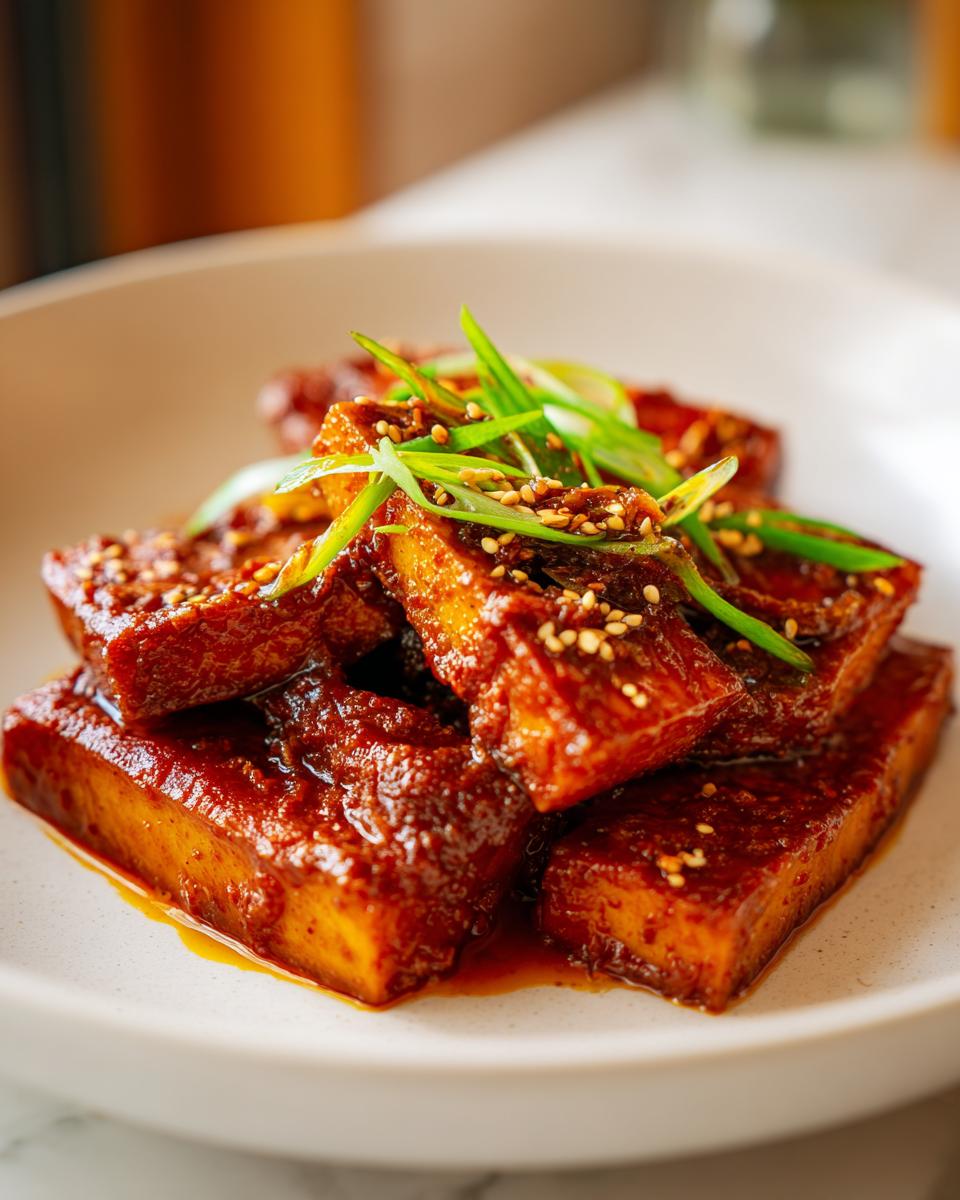
The best tofu for this job is always extra-firm, period. It handles the pressing process like a champ and stands up to simmering without crumbling into little bits when you try to scoop it onto your plate. If you grab firm tofu, you must press it harder—I mean, really press it for an hour, maybe!
Now, about avoiding the heat. If you have sensitive mouths or you’re cooking for kids, you can absolutely make a milder version of this soy sauce braised tofu. Just skip the gochugaru and gochujang entirely. You’ll rely on just the garlic, soy sauce, a touch of sugar, and maybe a little splash of black vinegar for tang instead. It swaps from spicy braised tofu to a deeply savory vegetarian Korean meal perfectly!
Step-by-Step Guide: How to Cook Korean Braised Tofu (Dubu Jorim)
Okay, friends, this is where the action happens! I know the ingredient list might look long, but once you break it down, this whole process—from pressing the tofu to serving—takes less than 40 minutes. This is truly one of the best quick Korean dinner ideas because it moves so fast once everything is prepped. We want that beautiful, slightly chewy exterior holding onto that warm, savory sauce. Follow these steps closely, and you’ll master this korean braised tofu faster than you think. If you are looking for more high-speed recipes, check out my guide to quick easy weeknight dinners!
Preparing and Frying the Tofu for Korean Braised Tofu
First things first: press that tofu! I talked about it before, but it bears repeating. Get the water out so the pieces can actually absorb flavor. Once it’s pressed, cut your tofu into neat little half-inch squares or triangles—whichever shape you prefer. Now, here’s a little trick I learned: lightly brush or toss the tofu pieces with just one tablespoon of plain soy sauce. That tiny bit of saltiness acts like a base layer of flavor before we even cook them.
Heat your neutral oil in a non-stick skillet over medium heat. You want it hot enough to sizzle right away. Carefully place the coated tofu in the pan. Don’t overcrowd it! Fry them until they are genuinely golden brown and have a nice, slightly crisp skin on both sides. Once they look gorgeous, scoop them out and set them on a paper towel-lined plate while you whip up the sauce.
Simmering the Tofu in the Flavorful Sauce
While that skillet is still warm, whisk together your sauce components—the garlic, chilies, remaining soy sauce, sugar, and vinegar—and thin it with your 1/4 cup of stock or water right there in that same pan. Bring that mixture up to a gentle simmer. You’ll smell that glorious chili aroma immediately! Now, gently nestle those gorgeous fried tofu pieces back into the pan. They’ve waited long enough!
Let it simmer for about five to seven minutes. This is key: spoon the sauce over the top repeatedly, letting it bubble down the sides, but do not stir vigorously! If you toss it around like a stir-fry, those crispy edges you worked so hard for will shatter. Gently tilt the pan or use a soft spatula to nudge them around. When the sauce has thickened slightly and looks sticky, take it off the heat. Finish with that drizzle of sesame oil, green onions, and seeds, and serve hot!
Serving Suggestions for This Traditional Korean Banchan
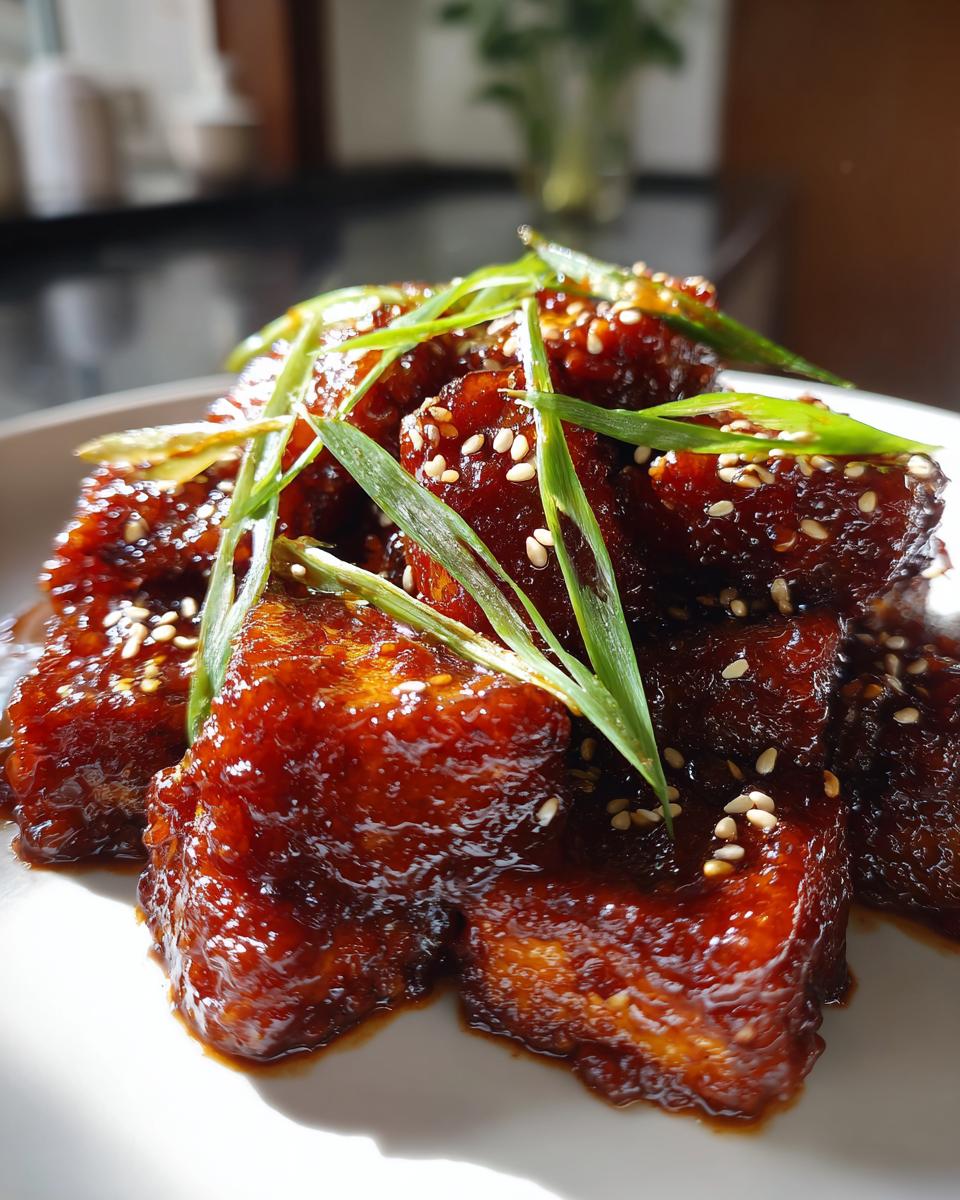
Honestly, this delightful tofu side dish can be eaten with pretty much anything, but it really shines when it’s part of a balanced Korean table setting. Since we’ve got this incredibly flavorful, saucy protein here, you need something simple to soak it all up. The absolute best pairing is a big, steaming bowl of freshly made white rice. I’m partial to a really fluffy texture—it just catches that spicy sauce better than anything else. You can check out my favorite method for getting rice perfectly fluffy! See my fluffy rice guide here.
But banchan is all about variety, right? Don’t stop at just this tofu! Serve it alongside some simple seasoned spinach (sigeumchi-namul) and maybe some quick pickled radish. That combination of the warm, saucy tofu, the fresh green veggies, and the perfectly cooked rice is all you need for an incredibly satisfying and quick vegetarian Korean meal. It feels like a feast without any of the stress!
Storage and Reheating Tips for Leftover Korean Braised Tofu
Here’s the wonderful thing about dishes that simmer in savory sauces: they often taste even better the next day! Day-old flavors just meld together, don’t you think? This korean braised tofu stores beautifully, which is why it’s a staple make-ahead side dish. You’ll definitely want to save some!
Keep your leftovers in a truly airtight container. I highly recommend glass containers for tofu dishes because they don’t absorb any lingering smells. You can safely keep this in the refrigerator for up to four days. Because tofu can sometimes dry out slightly as it chills, the reheating process is crucial for bringing that sauce back to life.
When you’re ready to eat it again, don’t just microwave it dry! Take the tofu out and put it back into a small, non-stick skillet over low heat. Add just a tiny splash of water—maybe a teaspoon or two to start. As it heats up slowly, that little bit of liquid will create steam and loosen the sauce, making it glossy and fresh again. It will taste just as good as when you first made it!
Frequently Asked Questions About Making Dubu Jorim
I always get so many great questions once people start trying out their first batch of Dubu Jorim! It’s just one of those perfect homemade Korean side dishes that keeps drawing people back. Don’t hesitate to ask if you run into trouble—we’re all learning together in the kitchen, right?
Can I make this a vegetarian Korean meal without losing flavor?
Absolutely, you can! The base recipe I shared is designed to be vegetarian already, provided you use plain water for thinning the sauce instead of anchovy stock. Since tofu is the star, the depth has to come from the aromatics and the seasonings. That spicy braised tofu paste—the gochujang and gochugaru—is doing most of the heavy lifting here. As long as you don’t skimp on the garlic and chili flakes, this simple tofu recipe will be bursting with flavor even without any meat or fish products!
What is the difference between this and soy sauce braised tofu?
That’s a key distinction! When we talk about traditional Dubu Jorim, we usually mean the slightly spicy version featuring that beautiful red hue from the chili paste and flakes. That’s my go-to for a truly authentic Korean tofu recipe.
However, the milder version you mentioned—soy sauce braised tofu—is fantastic, particularly for those who don’t like heat, or if you’re looking for a recipe that tastes purely savory. To make that version, you simply leave out the gochujang and gochugaru entirely. You’ll double down on the soy sauce and maybe add a tiny bit more sugar and a splash of rice vinegar to keep the balance. It becomes a fantastic, purely umami-rich dish, perfect for a quick Korean dinner idea!
How do I ensure I have the right Korean pantry staples on hand?
If you’re building your collection for authentic Korean cooking, start with gochujang and gochugaru (I linked to some general usage tips if you need them over on my privacy page—just kidding, you can find my pantry notes linked in the main navigation!). Once you have those, you’re set for most introductory dishes. Soy sauce and sesame oil are standard, but those chili products are what give you that authentic punch, whether you’re making this spicy braised tofu or something else entirely!
Quick Korean Dinner Ideas Featuring Korean Braised Tofu
Sometimes dinner needs to happen fast, and that’s where this dish truly shines beyond just being a side! People often think of banchan as something small you eat alongside a main course, but trust me, this korean braised tofu can absolutely anchor a quick Korean dinner idea on its own. Since it’s packed with protein and that huge punch of flavor, you don’t need a lot of fuss to make it feel like a complete meal.
The most obvious partner, as I mentioned before, is rice. Steamed white rice just melts under the sauce, but if you’re craving something different, try tossing these tofu pieces with some slightly chewy knife-cut noodles. They grab onto that caramelized sauce so well!
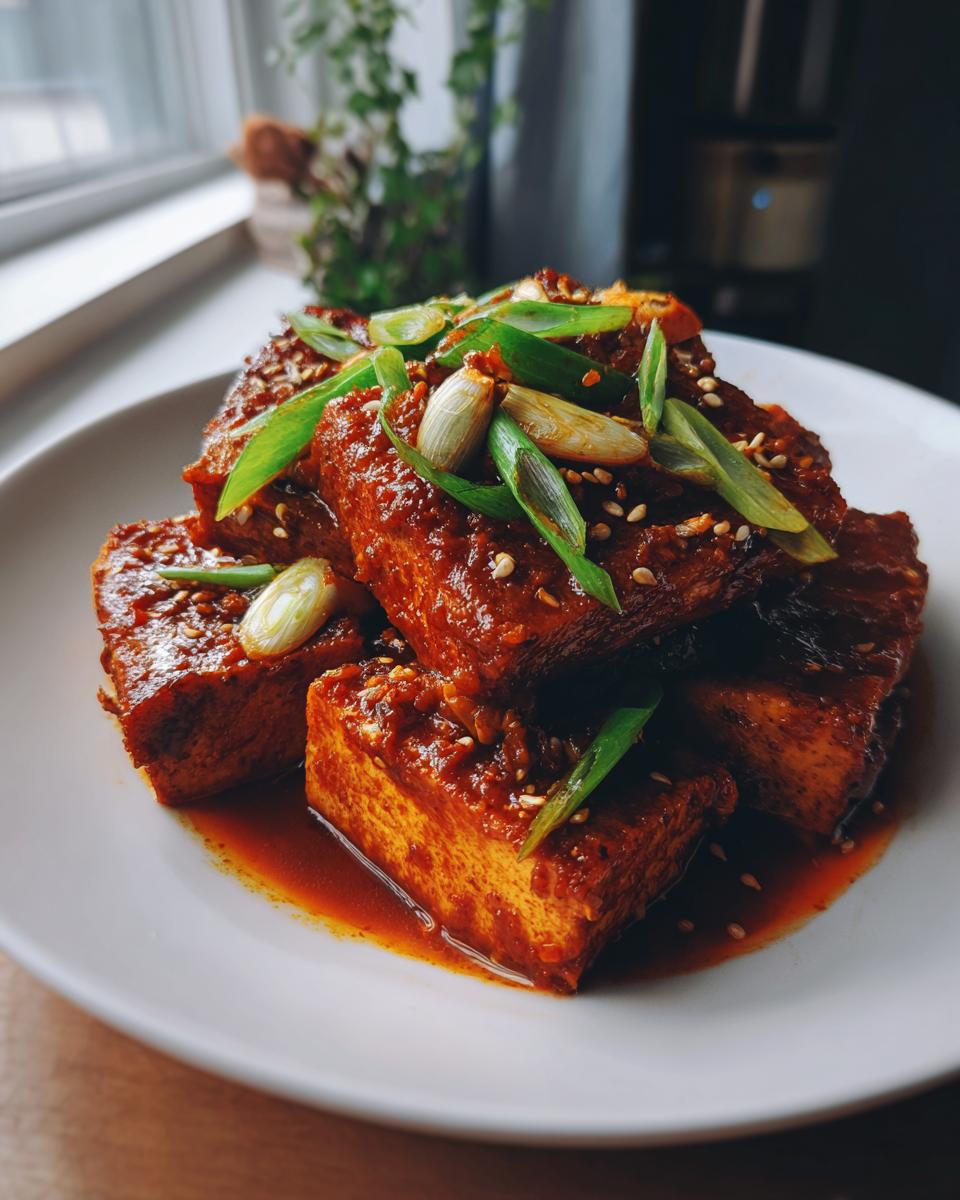
If you want to turn this into a heartier bowl, just pile the saucy tofu over rice, maybe add a quick-fried egg on top (sunny-side up so that yolk mixes with the sauce—heavenly!), and throw some refrigerated kimchi on the side. That entire, satisfying meal, packed with flavor, comes together in under 30 minutes because the tofu only takes five minutes to simmer! It’s my favorite way to eat comfort food when I’m rushing home from running errands. For more speedy meal inspiration, check out my simple lunch recipes too; many of those ideas crossover into quick dinners!
Recipe Overview: Times and Yield for Your Korean Braised Tofu
I know sometimes you just need the facts upfront before you dive into the cooking! I always try to include this snapshot so you know exactly what you’re getting into, time-wise. This dish is incredibly speedy, which is why it’s become such a favorite weeknight staple around my house. I appreciate recipes that respect my time, and I hope this one does the same for you!
The best part is that even though the prep time is short, the soaking time for the tofu is factored in separately, which is good to know. Here’s the breakdown for this amazing dish:
- Prep Time: About 15 minutes—this mostly covers chopping your aromatics and mixing that simple sauce if your tofu is already pressing!
- Cook Time: Right around 20 minutes total, including frying and simmering.
- Total Time: A super fast 35 minutes (assuming you’ve given your tofu at least 30 minutes to press!).
- Yield: This recipe is set to serve about 3 people, which usually means I end up with a couple of perfect portions left over for lunch the next day!
Share Your Experience Making This Korean Braised Tofu
I truly hope this recipe has brought a little bit of that soulful, comforting Korean home cooking right into your kitchen. Remember what I always say? Cooking is about connection, and that includes connecting with the people who are trying the same recipes across the country!
Once you’ve tried this korean braised tofu, please, please let me know how it went! Did you stick to my suggestion of 1 tablespoon of gochugaru, or did you brave the heat and go a little spicier? Tell me about your favorite way to serve it—did you pair it with rice, or did you try it over noodles? Every comment helps me learn, and it builds a wonderful community right here on CravyBite Kitchen.
Don’t forget to give the recipe a star rating if you loved it; that feedback really helps other cooks feel confident trying a new traditional Korean banchan. If you have any questions at all while you are cooking, shoot me a message through the contact page. Happy cooking, everyone!
PrintAuthentic Dubu Jorim: Korean Braised Tofu
Learn to make traditional Dubu Jorim, a flavorful Korean braised tofu side dish featuring a savory and slightly spicy sauce made with essential Korean pantry staples.
- Prep Time: 15 min
- Cook Time: 20 min
- Total Time: 35 min
- Yield: 3 servings 1x
- Category: Side Dish
- Method: Pan-Frying and Simmering
- Cuisine: Korean
- Diet: Vegetarian
Ingredients
- 1 block (14-16 oz) firm or extra-firm tofu
- 2 tablespoons neutral cooking oil
- 1/4 cup water or anchovy stock
- 1 tablespoon soy sauce (for coating)
- 1 teaspoon sesame oil (for finishing)
- 1 green onion, sliced (for garnish)
- 1 teaspoon sesame seeds (for garnish)
- 2 cloves garlic, minced
- 1 tablespoon gochugaru (Korean chili flakes)
- 1 tablespoon gochujang (Korean chili paste)
- 1 tablespoon soy sauce (for sauce)
- 1 teaspoon sugar or corn syrup
- 1 teaspoon rice vinegar
Instructions
- Press the tofu for at least 30 minutes to remove excess water. Cut the pressed tofu into 1/2-inch thick slices or cubes.
- Lightly coat the tofu pieces with 1 tablespoon of soy sauce.
- Heat the neutral oil in a non-stick skillet over medium heat. Pan-fry the tofu pieces until golden brown and slightly crisp on both sides. Remove the tofu and set aside.
- In a small bowl, mix the sauce ingredients: minced garlic, gochugaru, gochujang, 1 tablespoon soy sauce, sugar, and rice vinegar. Add 1/4 cup of water or stock to thin the sauce slightly.
- Pour the sauce mixture into the same skillet. Bring it to a gentle simmer.
- Carefully place the pan-fried tofu back into the skillet. Spoon the sauce over the tofu pieces.
- Simmer gently for 5 to 7 minutes, turning the tofu occasionally so it absorbs the sauce evenly. Do not stir vigorously, or the tofu may break.
- Remove from heat. Drizzle with sesame oil and garnish with sliced green onion and sesame seeds before serving.
Notes
- For the best texture, use extra-firm tofu and press it well. You can also lightly dust the tofu with cornstarch before frying for extra crispness.
- If you prefer a milder flavor, reduce the amount of gochugaru and gochujang, or omit the gochujang entirely for a soy sauce braised tofu version.
- Store leftover Dubu Jorim in an airtight container in the refrigerator for up to 4 days. Reheat gently in a pan with a splash of water to refresh the sauce.
Nutrition
- Serving Size: 1 serving
- Calories: 210
- Sugar: 5
- Sodium: 550
- Fat: 12
- Saturated Fat: 2
- Unsaturated Fat: 10
- Trans Fat: 0
- Carbohydrates: 15
- Fiber: 3
- Protein: 14
- Cholesterol: 0