Lacto-Fermented Rhubarb Pickles with Ginger
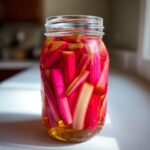
Make tangy, probiotic rhubarb pickles using traditional lacto-fermentation combined with the spice of fresh ginger. This recipe guides you through safe vegetable fermentation for a unique condiment.
- Prep Time: 20 min
- Cook Time: 0 min
- Total Time: 20 min
- Yield: 2 quarts 1x
- Category: Condiment
- Method: Lacto-Fermentation
- Cuisine: American
- Diet: Vegan
Ingredients
Scale
- 1 pound fresh rhubarb stalks, cut into 1-inch pieces
- 1 inch fresh ginger, thinly sliced
- 3 cups filtered water
- 1.5 tablespoons non-iodized salt (kosher or sea salt)
- 1 teaspoon whey or a small starter culture (optional, for faster fermentation)
Instructions
- Prepare the brine: Dissolve the salt completely in the filtered water. Stir until the water is clear. This creates a 2% salt brine, suitable for safe vegetable fermentation.
- Pack the jars: Place the cut rhubarb and sliced ginger into clean, wide-mouth quart-sized mason jars. Distribute the rhubarb evenly.
- Add the brine: Pour the salt brine over the rhubarb and ginger, leaving about 1 inch of headspace at the top of the jar. If using whey or starter culture, add it now.
- Submerge the vegetables: Place a fermentation weight on top of the rhubarb to keep it fully submerged beneath the brine. This step is crucial for safe vegetable fermentation.
- Seal the jars: Affix an airlock lid or loosely place a standard lid on the jar. Airlocks allow gases to escape without letting air in.
- Ferment: Place the jars in a cool, dark place, ideally between 65°F and 72°F. Check daily for signs of active fermentation, such as bubbles rising.
- Monitor fermentation: For the first few days, check the jars daily. If using a standard lid, ‘burp’ the jar (briefly open and close the lid) once or twice a day to release pressure. Active fermentation usually begins within 24 to 72 hours.
- Taste and finish: Allow the pickles to ferment for 5 to 10 days, tasting after day 5. When the flavor is tangy enough for your preference, remove the weights and secure the lids tightly.
- Store: Transfer the finished lacto fermented rhubarb pickles to the refrigerator. They will keep for several months.
Notes
- Use only non-iodized salt for vegetable fermentation; iodine can inhibit beneficial bacteria growth.
- Ensure all rhubarb stays below the brine line to prevent mold growth.
- The texture will soften slightly during fermentation, resulting in a tangy rhubarb preserves.
- If you see white film (kahm yeast) on the surface, skim it off; it is generally harmless but indicates too much air exposure.
Nutrition
- Serving Size: 1/4 cup
- Calories: 15
- Sugar: 1
- Sodium: 250
- Fat: 0.1
- Saturated Fat: 0
- Unsaturated Fat: 0
- Trans Fat: 0
- Carbohydrates: 3
- Fiber: 1
- Protein: 0.5
- Cholesterol: 0