

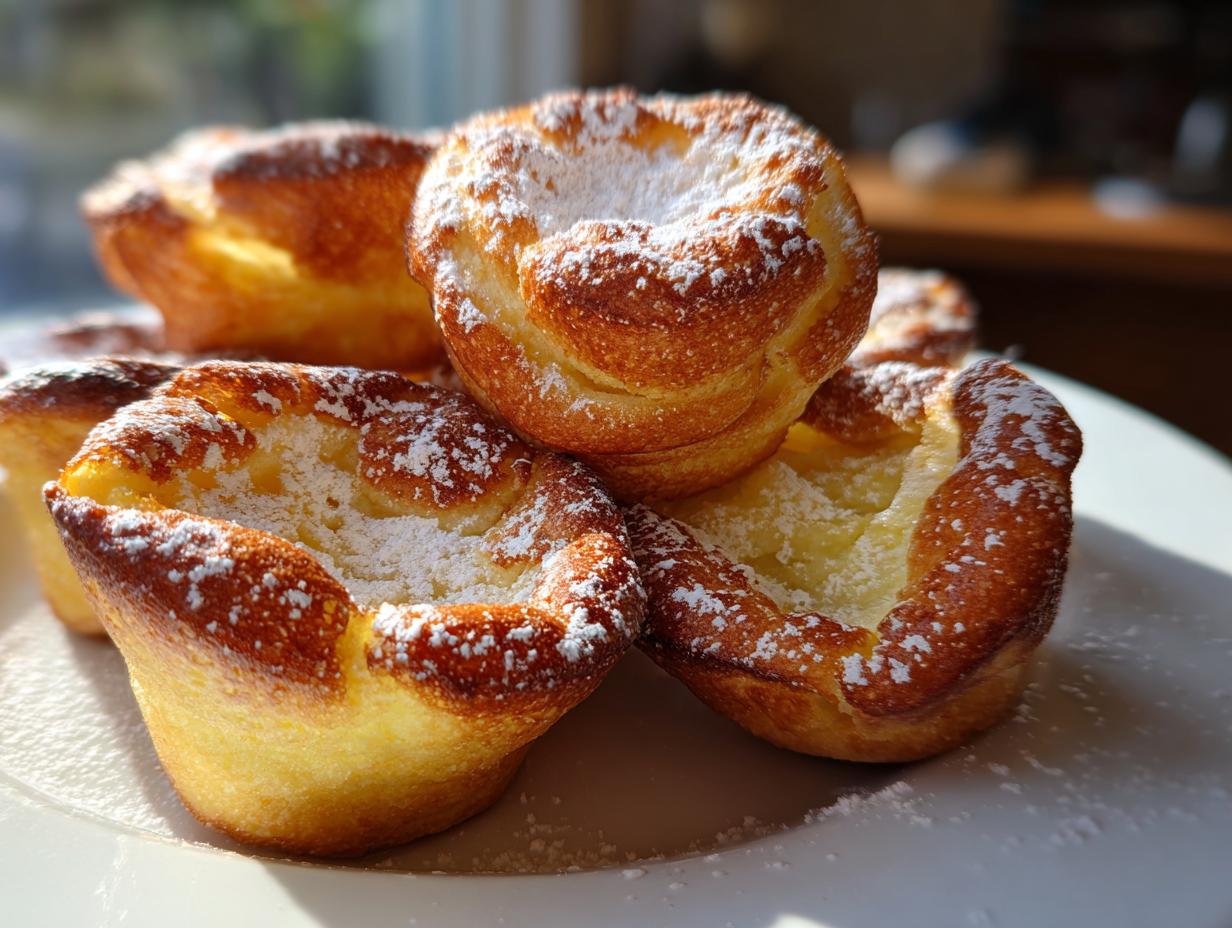
If you think impressive brunch means hours of standing over the stove flipping delicate crepes, let me stop you right there! I’m Jess Carter from CravyBite Kitchen, and I want to show you my secret weapon for looking like a breakfast wizard with almost zero effort: mini german pancakes. Yes, we’re taking that giant, theatrical Dutch Baby and turning it into perfectly portioned little clouds baked right in a standard muffin tin. Trust me, the high, puffy edges contrasting with that tender, almost custardy center makes this an absolute showstopper. This reliable American-style oven bake is all about technique, and since we put so much care into testing our family recipes, you can count on this one delivering that amazing puff every single time.
- Why You Will Love This Easy German Pancakes Recipe
- Essential Ingredients for Perfect Mini German Pancakes
- Equipment Needed for Making Individual Serving German Pancakes
- How to Prepare Mini German Pancakes: The Fluffy Oven Pancakes Tutorial
- Troubleshooting Common Issues with Mini German Pancakes
- Serving Suggestions for Your Sweet Baked Pancake Recipe
- Variations on the Classic German Pancake Recipe
- Storage and Reheating Instructions for Leftover Mini German Pancakes
- Frequently Asked Questions About Making Mini Dutch Babies
- Estimated Nutritional Snapshot for Mini German Pancakes
- Share Your Success with This Quick Breakfast Bake
Why You Will Love This Easy German Pancakes Recipe
Listen, when it comes to weekend mornings, I choose that extra ten minutes of sleep over fussy cooking every single time. This recipe truly shines because it solves so many breakfast dilemmas at once. You get all the drama of a giant Dutch Baby, but in a size that’s perfect for everyone to grab their own!
- Lightning Fast Prep Time: Seriously, you can whip up the simple batter in about five minutes flat. It’s basically a quick breakfast bake that feels way more sophisticated than it is.
- Perfect Portion Control: No more messy slicing or arguments over who gets the biggest piece! Baking them in a muffin tin means everyone gets their own fluffy portion immediately.
- The Texture is Everything: That signature high edge that puffs up gloriously in the oven, giving way to a soft, slightly chewy middle? It happens automatically with this oven method.
- Minimal Cleanup: Since we are using a muffin tin or a single oven-safe skillet, cleanup is way less of a headache than scrubbing a giant cast iron pan.
- Reliable Results: Because Jess spent years perfecting the egg-to-milk ratio for the oven, this easy german pancakes recipe is incredibly dependable. You won’t get sad, flat pancakes here!
Essential Ingredients for Perfect Mini German Pancakes
Getting the ingredients right is half the battle, and honestly, this recipe relies on pantry basics, which I just love. The key to getting those amazing tall sides on your individual serving german pancakes is making sure your eggs are at room temperature. Cold eggs don’t incorporate air as well, and we need every bit of aeration we can get!
Here’s what you’ll need for our small batch dutch baby that yields about 12 little beauties:
- 3 large eggs (Room temperature is vital!)
- 1/2 cup all-purpose flour
- 1/2 cup milk (Whole milk is my preference, but use what you have)
- 1/4 teaspoon salt
- 2 tablespoons unsalted butter, melted, plus extra for greasing the tin
- 1 teaspoon vanilla extract (This is completely optional, but it adds a nice warmth)
- For serving: Powdered sugar, fresh lemon wedges, or berries
Ingredient Notes and Substitutions for Your Mini German Pancakes
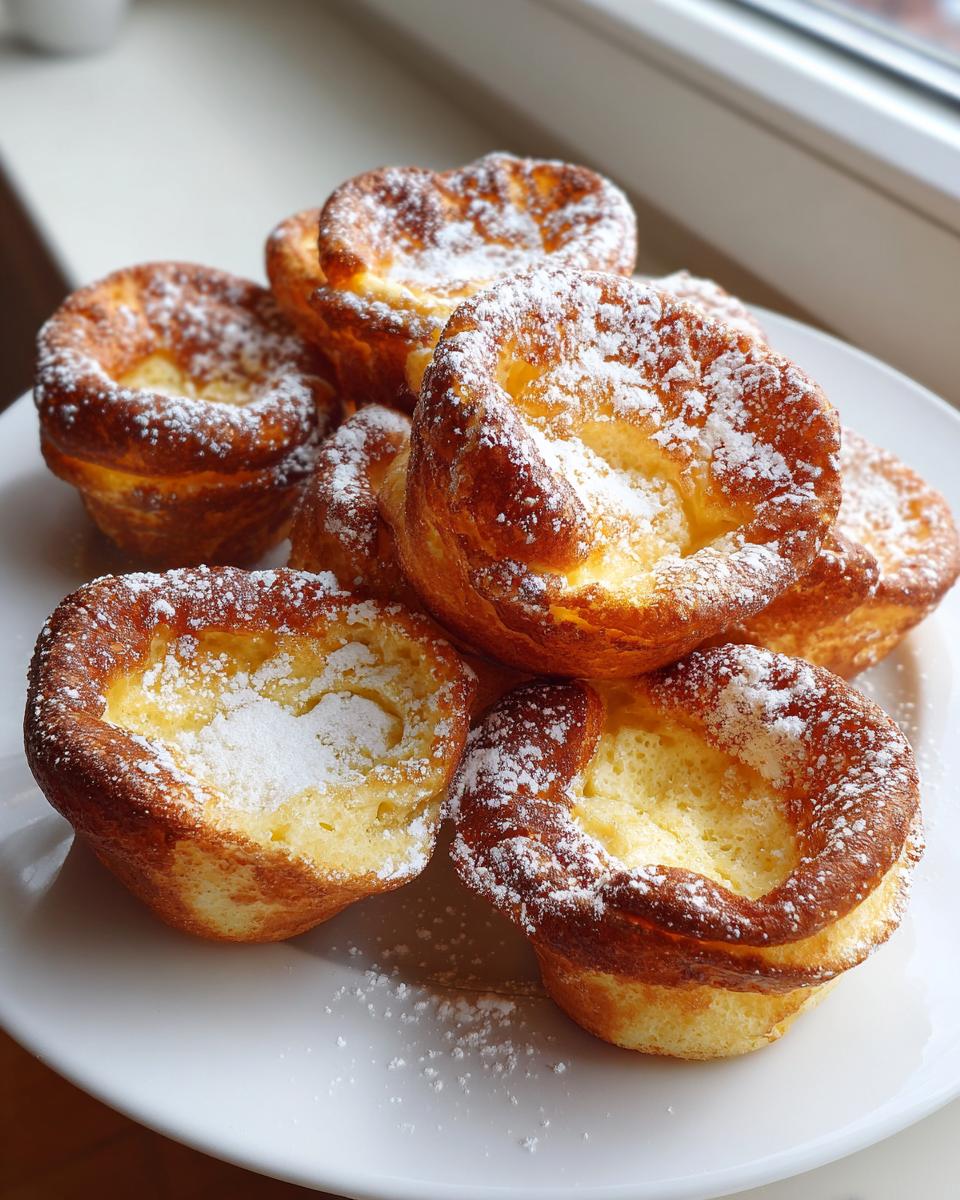
Let’s talk milk for a second. I always lean toward whole milk here because the fat content helps maintain that rich quality, but 2% will work just fine if you’re cutting back a little. The most important step besides the eggs is the butter: it needs to be fully melted and integrated into the batter, not just lukewarm. This fat carries the flavor and helps prevent sticking.
Now, the vanilla? If you’re out, genuinely don’t sweat it. The flavor signature of a German pancake comes from the baked egg and butter, not necessarily the vanilla. If you want to save time, you can even make a quick homemade german pancake mix ahead of time, just keep the liquid separate!
Equipment Needed for Making Individual Serving German Pancakes
Okay, so you don’t need tons of fancy gear for this! That’s another reason why this recipe is so great for early mornings or when you’re trying out a new fluffy oven pancakes tutorial. We are embracing simplicity here, folks.
Your main star for these individual serving german pancakes is going to be your muffin tin. You absolutely need a standard 12-cup muffin tin. Make sure it’s a sturdy one, not one of those flimsy aluminum pans, because we are putting it into a screaming hot oven!
Here is the short and sweet list of what you’ll want ready on your counter:
- A sturdy 12-cup standard muffin tin.
- A medium-sized mixing bowl for combining the batter.
- A whisk—hand whisking is totally fine here, don’t feel like you need the electric mixer, though it works too.
- A measuring cup set.
- A small bowl for melting your butter, maybe in the microwave for 20 seconds.
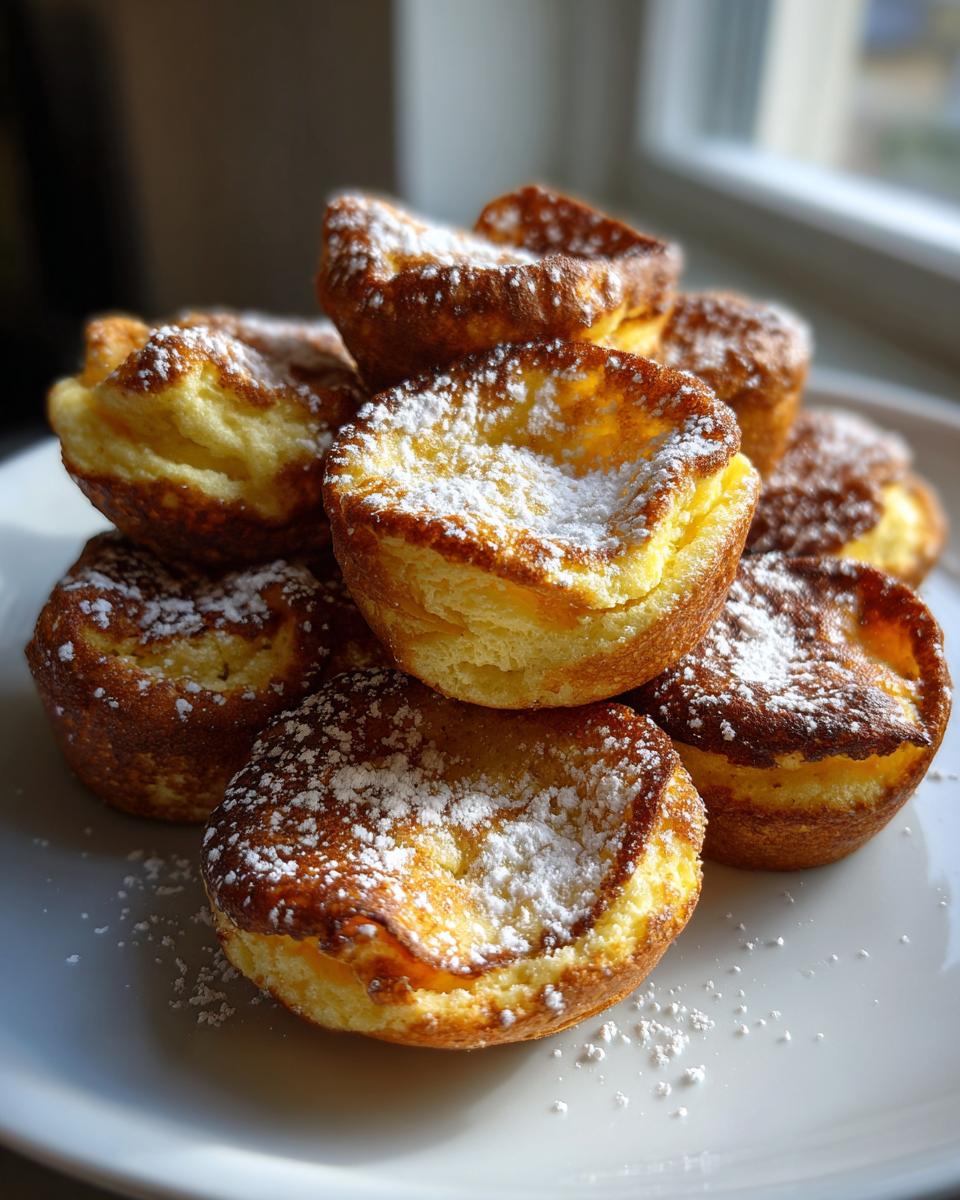
That’s honestly it! If you wanted to make one large pancake instead of the mini dutch babies, you could use an 8-inch oven-safe skillet. But for consistent, perfect puffs every time, stick to the muffin tin. It controls the heat distribution so well!
How to Prepare Mini German Pancakes: The Fluffy Oven Pancakes Tutorial
This is where the magic happens, and trust me, it’s incredibly straightforward. Our goal here is maximum lift! First things first: make sure your oven is cranked up to 425 degrees Fahrenheit. We need that high, shocking heat to get the rise we’re famous for. While it heats up, take your butter and generously grease every single cup in that muffin tin. Don’t be shy; a well-greased tin is crucial for those clean pulls later.
Next, we mix the batter. Remember, whisk those eggs first until they look a little frothy. Then, dump in the flour and salt and mix just until you see no dry streaks. Add the milk and vanilla last, mixing gently to keep that air we trapped in the eggs. Finally, stir in the melted butter right before pouring. Don’t let this beautiful batter sit around! Pour it evenly into your prepared cups—aim for about two-thirds full—and get them into that hot oven immediately. They need about 15 to 18 minutes to bake into gorgeous puffy oven pancakes.
Achieving the Signature Rise in Your Mini Dutch Babies
If you want that unbelievable puff, you have to treat the oven like it’s fragile glass for the first half of baking! My biggest tip, from years of baking these babies, is simple: Do not open the door for the first 12 minutes! The sudden drop in temperature is the number one killer of the puff. The heat needs to convert the moisture in the batter into instant steam, and if that steam escapes too soon, your pancake collapses into a sad puddle.
My personal trick as Jess is always placing the muffin tin on the center rack. This gives you the most even heat circulation from both the top and bottom elements. When they are finally done—and you can see those golden-brown, high edges—pull them out quickly and serve them right away. That immediate transfer to the plate is key to enjoying the fluffiest texture possible!
Troubleshooting Common Issues with Mini German Pancakes
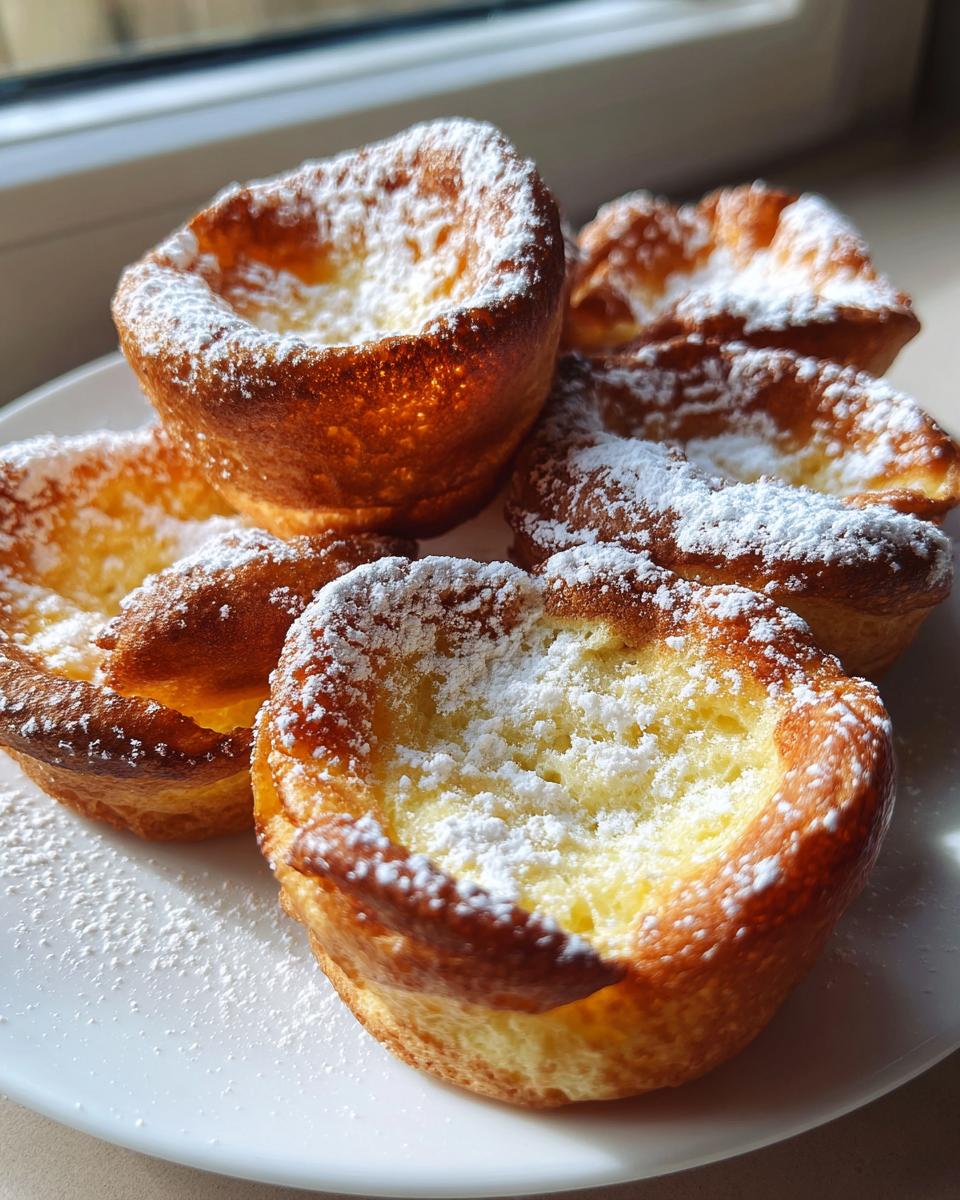
Even though this recipe is incredibly reliable, sometimes the oven gods just aren’t on our side, right? Don’t panic if your first batch of mini german pancakes doesn’t look like the picture on Instagram; it happens to everyone! I’ve dealt with nearly every pancake crisis imaginable in my CravyBite Kitchen days, and usually, the fix is super simple once you figure out the culprit.
My Mini Dutch Babies Didn’t Puff Up Enough!
This is the most common complaint for almost any oven-baked pancake, and 99% of the time, it boils down to heat. If your puff is weak or nonexistent, you need to check two things. First, was your oven truly at 425°F before those little tins went in? If the oven is still climbing to temperature, the batter just steams instead of baking explosively. Remember how I stressed preheating? That’s why!
Second, did you use cold ingredients? Room temperature eggs are non-negotiable for a good rise. Cold eggs lower the overall temperature of the batter immediately, slowing down that initial steam needed for lift. Also, make sure you didn’t overmix the batter once the flour went in!
Why Did My Pancake Collapse Immediately?
Oh, the dreaded anti-climax! They look amazing coming out of the oven, you rush them to the table, and *poof*—they look like sad, deflated little frisbees five minutes later. Okay, first piece of advice from Jess Carter: serve these immediately! German pancakes/Dutch Babies are meant to be eaten right out of the oven because the steam holding those walls up dissipates quickly.
However, if they collapse within the first minute of being removed, it usually means they were slightly underbaked. They need to set fully. A slightly underbaked center will fall as it cools. Next time, look for those deep golden-brown edges, and if you tap the side gently, it should feel set, not jiggly. They should look slightly dry on top when you pull them out.
Is the Batter Too Thick or Too Thin for Muffin Tins?
When making individual serving german pancakes in a muffin tin, the batter needs to be thinner than standard stovetop pancake batter. If your batter seems overly thick when you go to pour it—almost like thick cake batter—you might have accidentally added too much flour or not enough milk. If it’s too thin, it spreads out instead of rising up. If you suspect it’s too thick, just whisk in another tablespoon of milk until it flows smoothly off the whisk, but remember, don’t overdo it!
Serving Suggestions for Your Sweet Baked Pancake Recipe
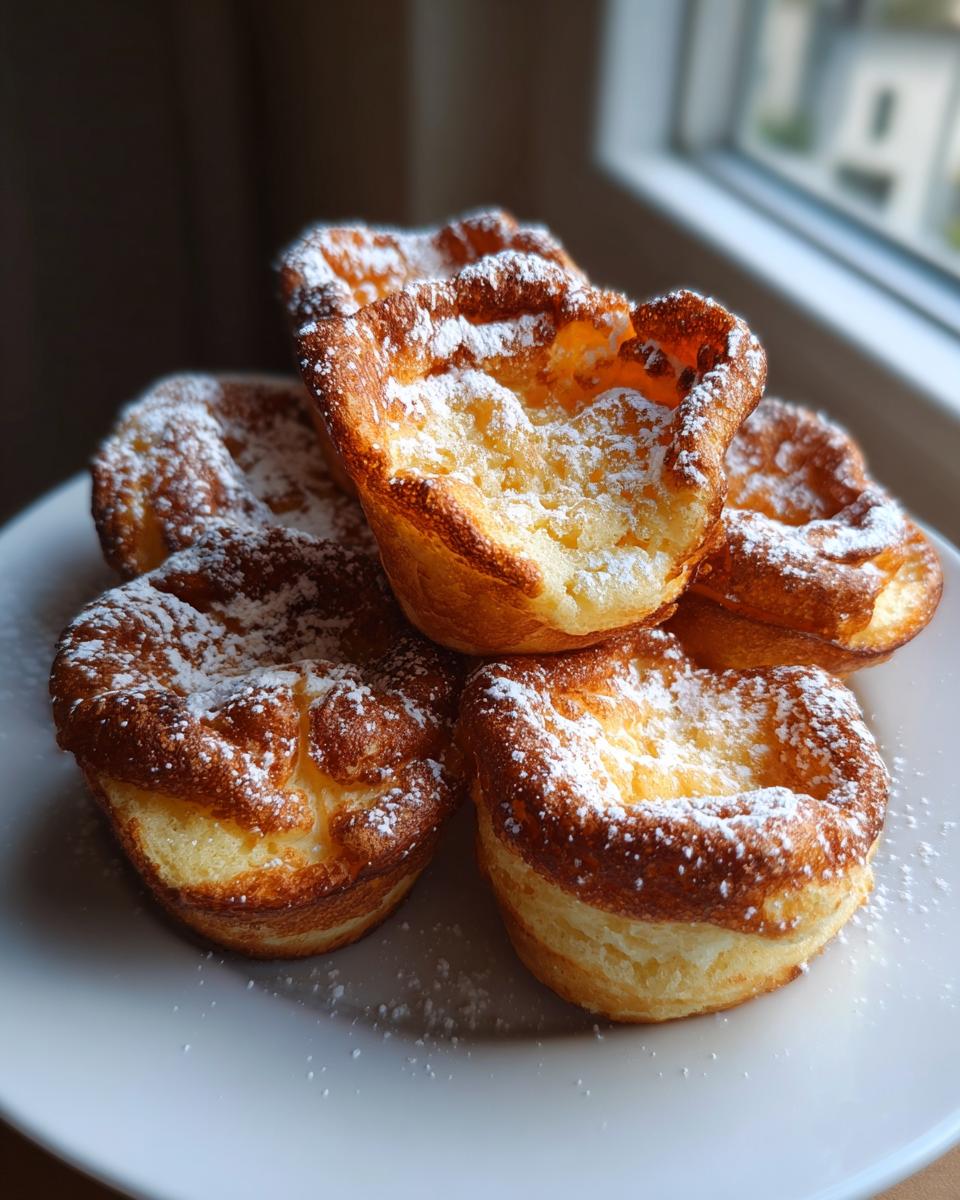
Once those beautiful little clouds come out of the oven, the fun really begins! Part of the tradition of a German pancake is dressing it up right before you eat it. Since these are smaller and easier to manage, you can even let the kids dress their own mini german pancakes. I always tell folks, don’t be afraid to move beyond just a dusting of sugar; make it a real treat!
The absolute classic, and what I grew up on, is the simplest preparation. We call these lemon sugar baby pancakes in our house:
- A very generous squeeze of fresh lemon juice over the top.
- A light dusting of fine powdered sugar (use a sieve for the prettiest look!).
That bright tartness cutting through the rich, eggy flavor is just heaven sent. But if you want to go all out, here are a few other ways I love to serve these:
For the Fruit Lovers: Fresh berries are glorious here—strawberries, blueberries, or raspberries scattered over the top work wonderfully. A little jam warmed up in the microwave also creates a fantastic filling that seeps into the center.
Syrup Upgrades: Forget plain maple syrup! Try drizzling on a good quality honey or even a thin caramel sauce. If you want to get really wild (and I recommend trying it at least once), you can whip up a quick marshmallow fluff—I have a recipe for easy homemade marshmallows that melts beautifully over these hot bites.
A quick sprinkle of cinnamon sugar right as they come out of the heat adds an extra layer of cozy aroma to your sweet baked pancake recipe.
Variations on the Classic German Pancake Recipe
The beauty of this classic german pancake recipe—even in its mini form—is how wonderfully adaptable it is. When I was first learning this technique, I used to experiment constantly just to see what would hold up to the intense oven heat. While the lemon and sugar is traditional perfection, sometimes our palates need a little shake-up, especially when serving these for a weekend brunch idea oven baked instead of just breakfast.
We can keep the base batter exactly the same, but adding just a touch of flavor before baking can completely change the profile of your mini german pancakes. It’s all about timing—you need to mix dry additions in with your flour, and wet additions (besides the ones already listed) in with your milk.
Sweet Batter Twists for Your Brunch
If you’re sticking to the sweet side, I have two super simple additions that give you a completely different result without complicating the **easy german pancakes recipe** part of the process.
First, the Cinnamon Sugar Bake: Before you mix the dry ingredients, take about a teaspoon of ground cinnamon and whisk it right into your 1/2 cup of flour. This deepens the flavor profile beautifully, almost mimicking a churro flavor once baked and topped with powdered sugar. It’s a real crowd-pleaser!
Second idea, for something a little brighter: Try substituting about a quarter cup of the milk with fresh orange juice. It gives the pancake a subtle citrus note that pairs amazingly well with whatever berries you decide to serve on top later. Don’t go over a quarter cup, or you risk messing up that crucial liquid ratio for the puff!
Turning Them Savory: A Great Brunch Idea
Now, don’t let anyone tell you German pancakes have to be sweet! Jess Carter totally embraces the savory route, and these turn into what is essentially a giant, fluffy popover, perfect for brunch when you want something less sugary. This is where you pretend you’re making a fancy egg bake instead of pancakes!
To go savory, you must omit the optional vanilla extract. Instead, when you add the salt to the flour, whisk in about 1/2 teaspoon of dried herbs. Thyme and chives work miracles here. You can also add a tablespoon of finely grated Parmesan or sharp white cheddar cheese right into the wet batter mix. When they pop up, serve them warm with a dollop of sour cream, some smoked salmon, or crumbled crispy bacon mixed into the cheesy center. It’s unexpectedly delicious and makes a fantastic presentation!
Remember, even when you experiment with these pancake variations, the core technique remains the same: get that tin piping hot, pour fast, and do not open the door until they’ve risen!
Storage and Reheating Instructions for Leftover Mini German Pancakes
Okay, let’s be real for a second. The absolute best thing you can ever do with these mini german pancakes is eat them immediately. I mean, straight from the oven, while they are still screaming hot and puffy! That magnificent rise we worked so hard to achieve is mostly steam, and steam, by nature, eventually vanishes. If you leave them sitting on the counter for too long, they will deflate into flatter, denser discs. They’re still tasty, but they lose that amazing show quality.
But hey, nobody’s perfect, and sometimes you just can’t get through all 12 little guys in one sitting. If you absolutely *must* save some for later, here is the way I recommend handling the leftovers. Do not try to save them hot, because the trapped steam will just make them soggy faster. Wait until they have completely cooled down to room temperature.
Once cool, place your leftover small batch dutch baby portions into an airtight container. They will keep okay on the counter for about 24 hours, but honestly, I find they are much better stored in the refrigerator for up to three days. Keeping them cold seems to shock the texture back a little bit for reheating.
The Best Way to Reheat for Maximum Crispness
Forget the microwave, please! Microwaving these will turn them into chewy little sponges, and we fought too hard for that oven puff to let that happen. If you want to bring back some of that glorious crispness on the edges, you need dry, direct heat.
My go-to method for reviving these is either the toaster oven or an air fryer. Both appliances excel at getting outside surfaces crisp without overcooking the already cooked interior.
- Toaster Oven Method: Set your toaster oven to about 350°F (175°C). Place the mini pancakes directly on the rack (not the tray, unless it’s a wire rack insert). Heat for about 3 to 5 minutes. Watch them closely! You want them heated through and slightly crisp on the edges.
- Air Fryer Method: If you have an air fryer, this is even better! Set it to 325°F (160°C). Pop the pancakes in a single layer for just 2 to 4 minutes. Because the circulation is so intense, they heat up rapidly.
When they come out of the revival phase, serve them immediately with a fresh squeeze of lemon juice or a new dusting of powdered sugar, and nobody will ever know they weren’t fresh out of the oven the first time around!
Frequently Asked Questions About Making Mini Dutch Babies
I always get questions bouncing around CravyBite Kitchen about how to make sure these puff just right, especially when people try to adapt the recipe. Since these mini german pancakes rely so much on that high oven heat, small changes can really make a difference. Here are the things I hear most often!
Can I use vegetable oil instead of butter for greasing the tin?
While you *can* use oil to grease the muffin tin, I really, truly advise against it if puff is your goal. Butter helps create a barrier that encourages the batter to grab the sides of the cup and pull up higher. Oil tends to let the batter slip a bit more, leading to a less dramatic rise. If you’re desperate and have no butter, use cooking spray that contains some form of fat, but know you might sacrifice a little bit of that signature height in your mini dutch babies.
How do I make one large Dutch Baby instead of these individual serving german pancakes?
That’s an easy switch! If you want to stick to the classic german pancake recipe but only feed one or two people, skip the muffin tin entirely. Just take one 8-inch or 10-inch oven-safe skillet, use the same amount of batter (it will be plenty!), and grease it heavily with butter as described in the instructions. Preheat that skillet in the oven along with the oven itself! Pour the batter into the hot pan and bake it. The cooking time will stretch a bit—probably closer to 22 to 25 minutes—but you’ll get that amazing single giant puff!
How far ahead can I prepare the batter for this quick breakfast bake?
This is where we run into trouble with this specific recipe. Because the batter is very thin and contains a lot of moisture and eggs, it’s meant to be baked immediately after mixing. If you try to make the batter for these puffy oven pancakes more than 10 minutes ahead of time, the gluten in the flour starts to relax, and the air you whisked into the eggs starts to deflate. You’ll lose your lift! My advice is to measure out your flour and salt ahead of time, but only mix the wet ingredients right before you pour them into the hot tin.
Do I really need 425°F, or can I use a lower temperature for baking?
You absolutely need that high temperature—425°F is the magic number for our fluffy oven pancakes tutorial! Think of it like a steam rocket: the high, fast heat is what causes that instant, vigorous expansion in the batter, creating the puffy edges. If you drop the temperature to, say, 375°F, the batter will start to set before the steam has enough energy to puff the edges up high. Stick to the recipe’s recommendation for the best results possible!
Estimated Nutritional Snapshot for Mini German Pancakes
Now, I know some of you CravyBite cooks are tracking things closely, and that’s totally fair! We want to enjoy our food mindfully. Because these mini german pancakes rely on simple ingredients like milk, eggs, and butter, the overall profile is actually quite balanced for a weekend treat. Remember, these figures are just estimates for one single mini pancake, made exactly as listed in the recipe without any heavy toppings like whipped cream or lots of sugar added.
I always tell my friends, the joy of a good brunch isn’t about depriving yourself; it’s about making something delicious from scratch so you know exactly what went into it. Here is a general snapshot based on the standard 12-yield recipe:
- Serving Size: 1 mini pancake
- Calories: Approximately 95
- Protein: About 3g
- Fat: Around 5g (A good portion of this is healthy fat from the butter/eggs!)
- Carbohydrates: Roughly 8g
- Sugar: Very low, usually just 1g naturally occurring sugar from the milk.
See? That’s fantastic for a puffy oven pancake! Keep in mind that once you start adding powdered sugar, fresh fruit like blueberries, or a drizzle of syrup, those totals will naturally increase. But for the plain, slightly puffy base, this is a wonderfully light way to enjoy a decadent-tasting breakfast. Trust me, the flavor you get for those 95 calories is worth every single bite!
Share Your Success with This Quick Breakfast Bake
That’s it! You’ve done it! You’ve mastered the art of the individual, puffy, glorious mini german pancakes right in your own home. Doesn’t that feel amazing? Bringing a huge smile to the table with something that took less than 25 minutes of your morning is what CravyBite Kitchen is all about, and I’m so incredibly proud of you for giving this classic oven bake a try!
Now, my kitchen is only complete when you all tell me how it went! I honestly want to hear every detail. Did they puff up spectacularly? Did you stick with the classic lemon and sugar, or did you try a savory variation? Don’t be shy!
Please, take a moment to leave a star rating right below this section. Those ratings help other home cooks, just like you, feel confident trying out a recipe that uses the oven for such a unique result. If you have any lingering questions that I haven’t covered in the FAQs, please drop them in the comments below. You can always reach out directly via my Contact page too, but usually, I see comments first!
And for the visual folks (you know who you are!), show the world your breakfast masterpieces! Snap a picture of your fluffy creations—whether they are tiny or if you used the skillet method for one giant one—and tag us on social media. Seeing your happy family enjoying this quick breakfast bake truly makes all the recipe testing worth it. Come join the growing CravyBite Kitchen community; we are all cheering for your kitchen success!
PrintEasy Mini German Pancakes (Muffin Tin Dutch Babies)

Make individual, puffy German pancakes, often called Dutch Babies, using a muffin tin for perfect small servings. This easy oven-baked recipe delivers high edges and a tender center every time.
- Prep Time: 5 min
- Cook Time: 18 min
- Total Time: 23 min
- Yield: 12 mini pancakes 1x
- Category: Breakfast
- Method: Baking
- Cuisine: American
- Diet: Vegetarian
Ingredients
- 3 large eggs
- 1/2 cup all-purpose flour
- 1/2 cup milk
- 1/4 teaspoon salt
- 2 tablespoons unsalted butter, melted, plus extra for greasing
- 1 teaspoon vanilla extract (optional)
- Powdered sugar, lemon wedges, or fresh berries for serving
Instructions
- Preheat your oven to 425 degrees Fahrenheit. Generously grease the cups of a standard 12-cup muffin tin with butter.
- In a medium bowl, whisk the eggs until they are light and slightly frothy.
- Add the flour and salt to the eggs. Whisk until just combined; do not overmix.
- Slowly whisk in the milk and vanilla extract until you have a smooth batter.
- Stir in the 2 tablespoons of melted butter.
- Pour the batter evenly into the prepared muffin cups, filling each about two-thirds full.
- Place the muffin tin in the preheated oven. Bake for 15 to 18 minutes. Do not open the oven door during the first 12 minutes of baking.
- The mini German pancakes are done when they are significantly puffed up and the edges are golden brown.
- Remove from the oven and serve immediately with your choice of toppings, such as a dusting of powdered sugar and a squeeze of fresh lemon juice.
Notes
- For the best rise, ensure your oven is fully preheated before placing the batter inside.
- You can substitute the muffin tin with a single 8-inch oven-safe skillet for one large Dutch Baby, increasing the bake time slightly.
- Serve these immediately as they will deflate quickly after leaving the oven.
Nutrition
- Serving Size: 1 mini pancake
- Calories: 95
- Sugar: 1
- Sodium: 85
- Fat: 5
- Saturated Fat: 3
- Unsaturated Fat: 2
- Trans Fat: 0
- Carbohydrates: 8
- Fiber: 0
- Protein: 3
- Cholesterol: 65