

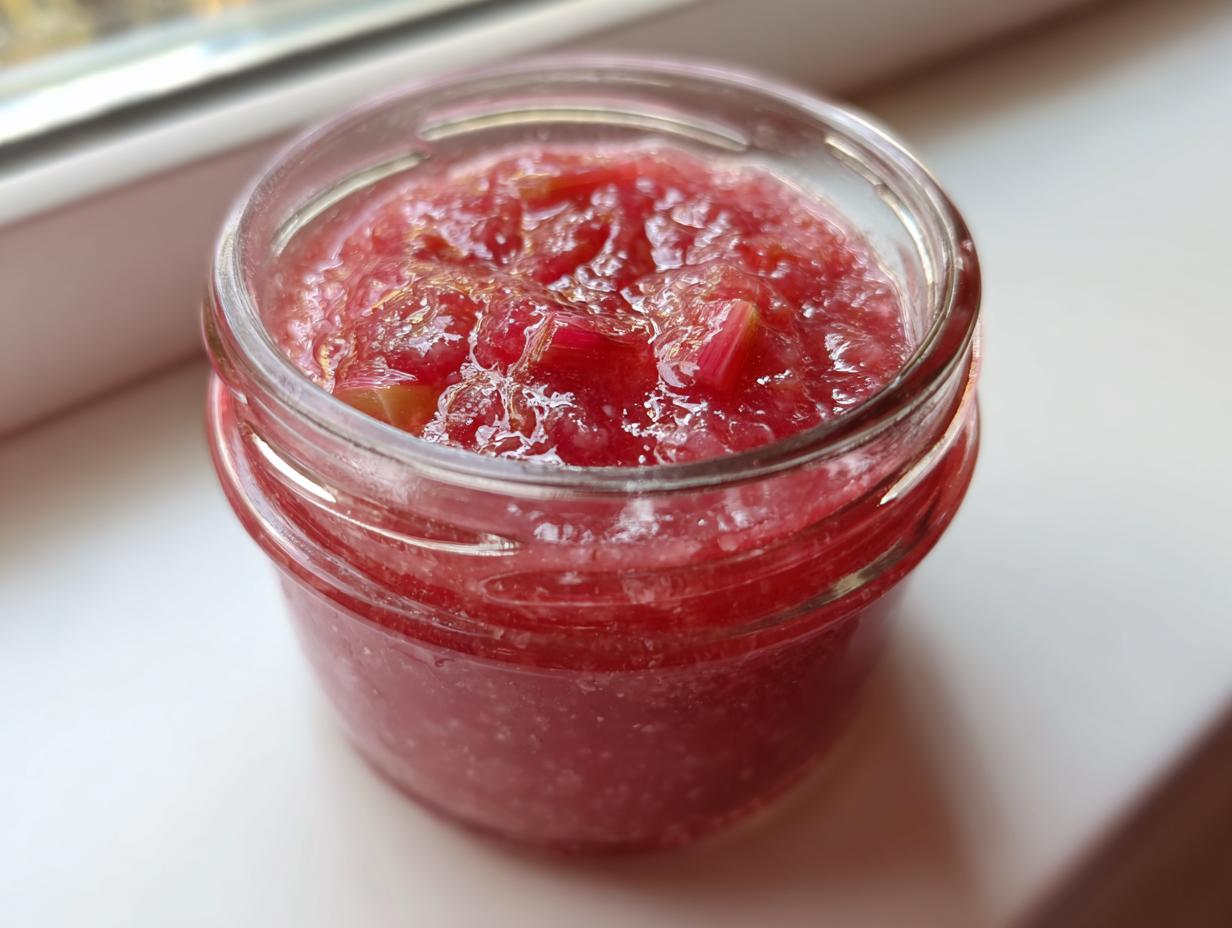
Oh, that wonderful, fleeting moment when rhubarb starts flooding the farmers’ markets! You know what I mean, right? That gorgeous tartness begs to be tamed into something spectacular. That’s why I’m so excited to share this **rhubarb cinnamon jam** recipe with you. It hits that perfect spot between tangy and sweet, with a deep, comforting swirl of cinnamon spice. Here at CravyBite Kitchen, Jess Carter’s goal is always to make real, honest food feel simple, and this preserve is the perfect example! With my background in nutrition, I love that we get so much wonderful flavor from seasonal produce without needing tons of complicated additives. Trust me, you’re going to want to slather this on everything. If you love simple **sweet and tart preserves**, you should absolutely check out my easy raspberry jam no pectin recipe too, but for now, this recipe is your new go-to!
- Why This Rhubarb Cinnamon Jam Recipe Works So Well
- Gathering Ingredients for Your Rhubarb Cinnamon Jam
- Step-by-Step Instructions for Easy Cinnamon Jam
- Tips for Perfect Rhubarb Jam Success
- Storage and Reheating Instructions for Your Preserve
- Variations on Rhubarb Cinnamon Jam
- Serving Suggestions for Sweet and Tart Preserves
- Frequently Asked Questions About Making Rhubarb Cinnamon Jam
- Final Thoughts on Preserving Seasonal Rhubarb
Why This Rhubarb Cinnamon Jam Recipe Works So Well
Look, making jam can get intimidating fast—all those rules about temperature and setting! But that’s why I developed this approach for our **rhubarb cinnamon jam**. I wanted something that worked almost every time, even if you’re making a **small batch jam making** endeavor for the first time. It’s designed to give you that incredible homemade flavor without the panic attack.
- Perfect Sweet-Tart Balance: Rhubarb is notoriously tart, but the combination with sugar and the warmth of cinnamon cuts through that sharpness beautifully. It tastes vibrant, not just sugary.
- Reliable Setting Power: By using a quality powdered fruit pectin, we ensure a dependable set. This means you end up with a beautiful spread, not soup! It’s honestly the most reliable **easy cinnamon jam instructions** I’ve ever tested.
- Deep Spice Integration: We aren’t just sprinkling cinnamon on at the end. We’re adding it right into the boil so the spice truly infuses the fruit, making this the **best rhubarb jam with spice** you’ll ever taste.
- Speedy Cooking Time: Because we’re using pectin, we only need a minute of hard boil after the pectin is added. This cooks the jam just enough to set but keeps the rhubarb from turning into total mush, preserving that fresh seasonal flavor.
If you’re looking for other quick ideas after you finish your preserving, check out my thoughts on simple lunch recipes for busy days!
Gathering Ingredients for Your Rhubarb Cinnamon Jam
Okay, let’s talk about what you need to bring this wonderful **rhubarb cinnamon jam** to life. For me, **preserving seasonal rhubarb** is all about respecting the ingredient. That’s why I need you to peek ahead at the specific quantities when you grab your supplies! You’ll notice we are using a specific amount of sugar, and that’s important because sugar isn’t just for sweetness here—it’s vital for the texture and for safety when we’re canning! I’ve kept this recipe as streamlined as possible, which is why my measurements are really exact. If you’re getting excited about canning, remember you can always find my guide on preserving seasonal rhubarb for the whole process!
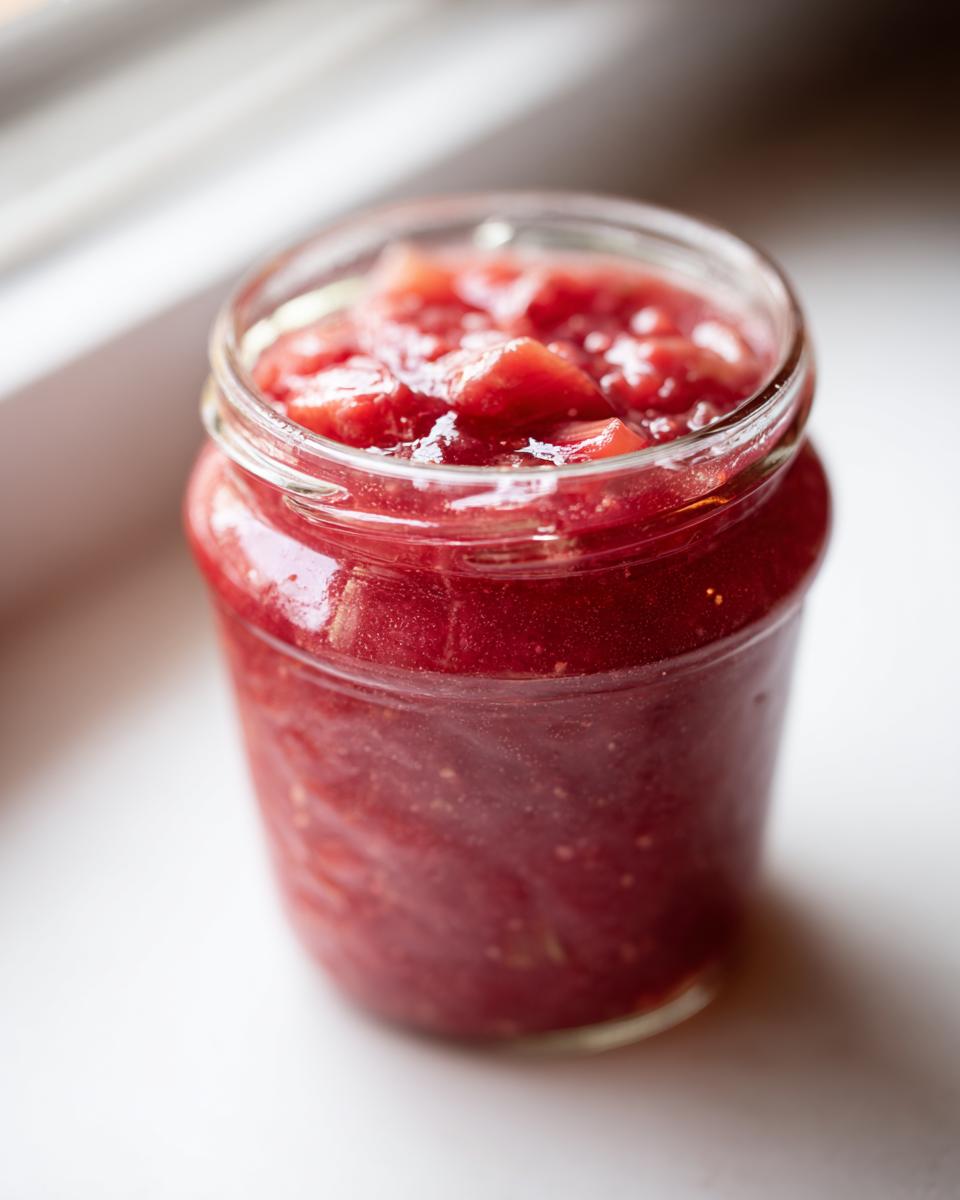
We start with two pounds of fresh rhubarb, and I need you to trim those ends off and chop them up into about half-inch pieces. Don’t chop them too small beforehand, because we want them to hold their shape a little bit in the final product! We’re using granulated sugar, but remember the little tip in the notes? If you want that deeper, almost caramelized background note—which I highly recommend sometimes—swap out maybe a quarter cup of the white sugar for light brown sugar. It just adds such a gorgeous complexity!
Now for the pectin decision. I included a package of powdered fruit pectin because it guarantees a fast set, making this a reliable **rhubarb cinnamon jam** recipe for beginners. However, if you’re insistent on making a **natural pectin free jam**, you totally can! You’ll just skip the pectin, increase the sugar a little bit more, and cook it for a much longer time until it passes the cold plate test. But for this spiced spread, the quick set pectin is my secret weapon for reliability.
Ingredient Clarity and Preparation Notes
Every single item in this recipe plays a specific role, and it’s not just random! The lemon juice, for instance, is super important because it supplies the necessary acid that activates the pectin and helps the jam set correctly. Without it, even with added pectin, your jam might be runny. That little bit of acid is critical for a good set!
Then there’s the star spice: ground cinnamon. It’s not overpowering, but it gives such a warm hug to the tartness of the rhubarb. Make sure you use ground cinnamon, not sticks, for this recipe because we need it to dissolve right into the mash. If you’re feeling fancy, a tiny grating of fresh nutmeg alongside the cinnamon really elevates this into something luxurious. These little details are what turn a simple **homemade rhubarb jam recipe** into a keeper!
When you’re ready to jump into the cooking part, don’t worry about the measuring being tedious now; it’s the time spent on these ingredients upfront during the gathering stage that saves you trouble later on! Remember to keep those jars hot while you prep everything else—it’s one of my non-negotiables for great sealing!
Step-by-Step Instructions for Easy Cinnamon Jam
Alright, deep breath! This is where the magic happens, and I promise, if you follow these steps for your **rhubarb cinnamon jam**, you’ll be storing jars of spiced goodness all winter long. The trick to a great preserve isn’t just the ingredients; it’s the rhythm of the cook time. We’re using pectin here, which is fantastic because it speeds up the process immensely compared to waiting for a natural set. Just make sure you have your hot jars ready to go before you even think about turning on the heat!
We start by getting everything organized. Remember the jars need to be sterilized! Keep them hot or warm so they don’t crack when that bubbling hot jam hits them. If you want the fastest path to delicious preserves, make sure you’ve got all supplies ready right now—it makes the actual cooking part a breeze. You can see my whole rundown on the quick cooking methods for quick stovetop jam methods if you want a general overview before diving in!
Maceration and Initial Cooking of Rhubarb Cinnamon Jam
My absolute number one requirement for this recipe—and please don’t skip this!—is maceration. Step two is crucial. You need to combine your cut rhubarb and the sugar in a really large, heavy-bottomed pot. I mean big! Rhubarb releases a ton of water, and we don’t want it boiling over or scorching on the bottom. Let that mixture sit for at least two hours, or even pop it in the fridge overnight. This draws out all those beautiful juices naturally.
Once it’s had its soak, set that pot over high heat. You need to stir constantly while it heats up because that sugar layer on the bottom *loves* to burn if you look away for a second! Bring the whole thing to a full, rolling boil. Once it’s boiling hard, stir in your lemon juice and that gorgeous ground cinnamon. Keep stirring until it comes roaring back to a full boil.
Activating Pectin and Achieving Setting Point
This next part moves fast, so pay attention! While the fruit mixture is boiling, quickly whisk your powdered pectin with just a tiny bit of cold water in a separate small bowl. Make sure there are zero lumps left—we need that slurry smooth.
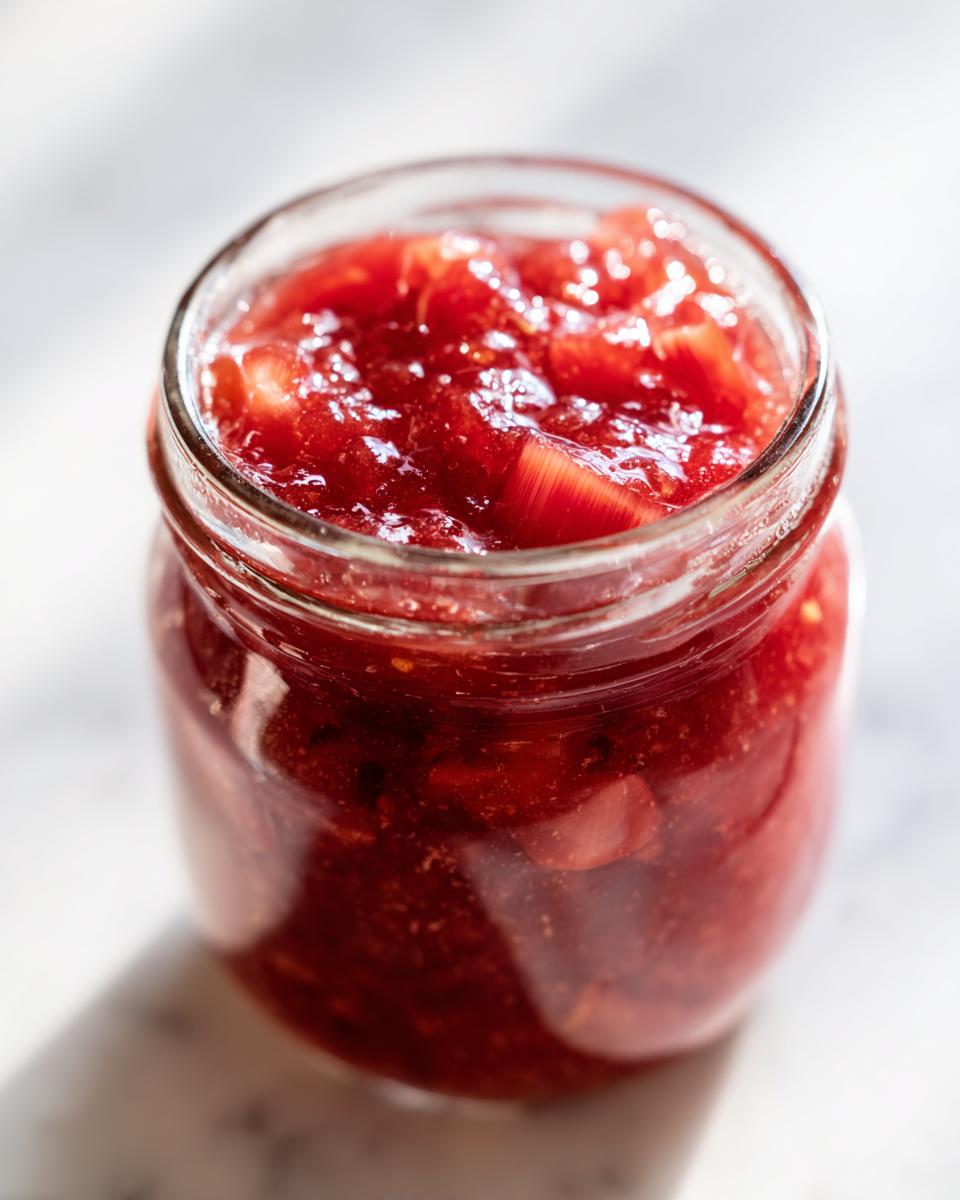
Now, pour that pectin slurry into your boiling rhubarb mixture. Stir non-stop and bring the jam *back* to a full, rolling boil. And here is the key: it has to be a boil that is so hard you cannot stir it down. It must stay furiously boiling. Once you hit that aggressive stage, you boil hard for exactly 60 seconds! Not 45, not 90. One minute! This precise timing is what lets the pectin grab hold and set the **rhubarb cinnamon jam** perfectly. As soon as that minute is up, pull the pot off the heat immediately—we don’t want to over-cook the flavor out!
Jarring and Canning Rhubarb Cinnamon Jam for Winter Storage
Okay, we’re almost stocked up! Now we need to get this hot jam into your hot jars. First, skim any foam off the surface with a metal spoon—that keeps your final jam looking beautiful and clear. Then, carefully ladle that **rhubarb cinnamon jam** into your sterilized jars. You must leave exactly 1/4 inch of empty space at the top; we call this headspace, and it’s essential for a good seal.
Next, wipe those jar rims down meticulously. No sticky jam residue allowed! Put the lids on and screw the bands down fingertip tight—meaning, tight enough that they won’t wiggle, but not so tight you need a wrench. Then, pop those jars into your boiling water bath canner. Process them for 10 minutes, but remember, if you live way up high in the mountains, you have to adjust that processing time. That’s critical for **canning rhubarb jam for winter storage** safety. Once the time is up, pull them out gently and let them sit completely undisturbed for a full day while they cool and seal. You want to hear those satisfying pings!
Tips for Perfect Rhubarb Jam Success
Even with a super reliable recipe like this one, there are always a few little things that can elevate your preserve from being good to absolutely stellar. Making jam is about control, especially over heat, but more importantly, it’s about listening to the pot! I learned these tricks over years of making **homemade rhubarb jam recipes**—sometimes successfully, sometimes resulting in a sticky mess on the stove.
The first thing I want to champion is patience during the initial melt. Don’t rush the maceration! Letting that rhubarb and sugar sit together for two hours (or even overnight) is non-negotiable for me. When you finally heat it, it releases its liquid slowly and evenly, which drastically reduces the chance of scorching. That sugar burns so easily if you start cooking cold rhubarb!
Next up: Foam management! After you pull the pot off the heat following that one-minute boil, you’ll see a layer of froth or foam sitting on top. If you just jar it like that, the top layer of your jam will look cloudy and messy. Always take a metal spoon—not plastic or wood—and gently skim off that foam. It takes two seconds, and it makes your final sealed jars look professionally pristine. It’s a small step, but it shows attention to detail!
Also, be mindful of over-stirring once the jam starts boiling hard. Once you add the pectin and it’s bubbling furiously, you need to stir just enough to keep it from sticking, but stop stirring excessively. Stirring too much right before the final set can actually break up the pectin chains before they bond, leading to a softer set. Trust the high heat to do its job!
If you are just making a very small batch for immediate use—maybe you only want to test it out before committing to a big batch—I highly recommend looking at my guide on small batch jam making. It saves counter space and you can enjoy your **sweet and tart preserves** almost immediately without needing the whole canning setup!
Storage and Reheating Instructions for Your Preserve
This is my favorite part of making the **rhubarb cinnamon jam**—knowing I have jars ready to go! Once you’ve completed the water bath processing and those jars have sealed (you should hear that lovely *pop* or feel the center lid pulled down firmly), they are ready for pantry life. Sealed jars are incredibly stable. If you store them in a cool, dark cupboard—no direct sunlight!—this beautiful **rhubarb cinnamon jam** will keep perfectly for at least a year, sometimes even longer. That’s the beauty of learning **canning rhubarb jam for winter storage**!
Now, for the jars that didn’t make it into the canner because you only made a **small batch jam making** amount, or if you just opened one up? Those go straight into the refrigerator. Once opened, just like any good fruit spread, you’ll want to use it up within three to four weeks. Keep the lid on tight, and always use clean utensils when scooping it out to avoid introducing any germs that might shorten its life.
What happens if you pull out a jar that you forgot about, and it’s a little stiff because it was super cold? Don’t panic! You shouldn’t reheat the entire sealed jar, of course, but if you scoop out a portion into a small saucepan to make it a little looser to drizzle, it’s very easy. Just heat it gently over low heat on the stovetop—almost too low to call cooking. You’re just warming it slightly, not boiling it again! Boiling that jam again will break down the pectin structure we worked so hard to set up, and you’ll end up with a thinner consistency.
Seriously, storing this **rhubarb cinnamon jam** is simple, and it means you have a taste of spring ready for your toast, scones, or even poured over ice cream in the middle of January. It’s worth every minute of the steaming and processing!
Variations on Rhubarb Cinnamon Jam
This **rhubarb cinnamon jam** is fantastic just as it is—a perfect marriage of tart fruit and warm spice. But who says we can’t play a little dress-up in the kitchen? I love experimenting with preserves because they are so forgiving in small batches! If you find yourself with extra rhubarb, or just want to change things up next time you’re making this spread, I have a couple of fun ideas that keep that core flavor profile intact but add some excitement.
If you want to enhance the complexity without completely changing it, try adding citrus. A bit of freshly grated orange zest—maybe just the zest of one small orange—added right when you add the cinnamon brightens everything up beautifully. The orange notes play so well with the slight earthiness of the rhubarb and the warmth of the cinnamon. It makes the jam smell incredible while it cooks, too!
For those who like a deeper, autumnal spice note, don’t be afraid to mix up your spice cabinet! Swap out half of the cinnamon for ground cardamom. Cardamom offers a slightly floral, complex kick that works wonders in **sweet and tart preserves**. Or, try a tiny pinch of ground cloves along with the cinnamon. Just be careful with cloves; a little goes a super long way, or it can taste medicinal, which is *not* what we want in our jam!
Now, if you want a major crowd-pleaser that uses up more fruit, you absolutely have to try the classic strawberry swap! If you’re looking for the perfect blueprint for that, you need to check out my dedicated strawberry rhubarb cinnamon jam variation recipe. It balances the strong acidity of the rhubarb with the sweet softness of the strawberries. Believe me, that version disappears off the toast rack the fastest in our family!
These small tweaks let you customize your **rhubarb cinnamon jam** every season. Whether you stick to that perfect spiced original or try one of these variations, you’re guaranteeing homemade deliciousness for your pantry!
Serving Suggestions for Sweet and Tart Preserves
Okay, so you’ve made a batch (or two!) of your beautiful, tangy, spiced jam. You’ve already used half a jar on morning toast—I totally get it! But I want to make sure you see how versatile these **sweet and tart preserves** really are beyond just spreading them on bread. When Jess Carter started making preserves, I honestly thought they were only for breakfast, but my world opened up when I started thinking outside the jar!
You need to think of this jam almost like a bright, flavorful chutney that happens to be very sweet. That tartness from the rhubarb cuts through richness beautifully. It’s not just a topping; it’s an ingredient!
Here are a few of my favorite ways to use up those jars before the winter gets too long:
- The Yogurt Swirl: Forget those highly processed fruit-on-the-bottom yogurts. Take a dollop of plain Greek yogurt—the tangier the better—and swirl in a spoonful of this jam right before serving. If you have granola, even better! It’s a ridiculously fast and healthy afternoon snack.
- Cheese Board Star: Seriously, bring this to your next gathering. Pair it with sharp white cheddar, or my personal favorite, a creamy high-quality goat cheese. The cinnamon cuts the sharpness of the cheese perfectly. It makes everyone ask what that amazing spread is!
- Glaze for Poultry or Pork: This might sound a little wild, but it works like magic, especially if you made the version with a touch of orange zest. Thin the jam slightly with a splash of cider vinegar over low heat and brush it onto chicken wings or pork tenderloin during the last 15 minutes of baking. It caramelizes into this gorgeous, spiced crust.
- Baking Boost: You can use this jam as a filling for thumbprint cookies or maybe even layer it between cake sponges instead of plain fruit filling. I’ve even added a spoonful to my muffin batter just before baking for little pockets of spiced fruit goodness.
When you’re done tasting it all, maybe you’ll be ready for something savory! I love balancing flavors, and if you’re interested in a savory dip that pairs nicely with cheese plates, you should take a look at my recipe for from-scratch French onion dip. It’s another simple recipe that delivers huge flavor!
Frequently Asked Questions About Making Rhubarb Cinnamon Jam
I always get so many questions when people try this recipe for the first time, especially around the pectin and the setting process. That’s totally normal when you’re moving into the world of **canning**! I’ve pulled together the most common things I hear so we can get you confident in the kitchen. Don’t let setting points scare you off; once you nail this, you’ll be turning out gorgeous **spiced fruit spreads** all the time. If you need something speedier for dinner tonight, check out my favorite quick easy weeknight dinners for inspiration!
Can I make this recipe without commercial pectin?
Oh yes, absolutely, you certainly can! That’s actually one of the most asked things, especially for those who like to keep their pantry stocked with only **natural pectin free jam** ingredients. If you skip the 1.75 oz packet of powdered pectin, you’ll need to make a few adjustments. You must increase your granulated sugar to 5 cups total, and then instead of boiling for that rapid one minute, you have to cook the jam much, much longer. You’ll need to test for the setting point, usually when the jam hits 220 degrees Fahrenheit on a candy thermometer. Keep stirring often and scraping the bottom to avoid burning as it concentrates! It takes more time, but the flavor develops really deeply.
What is the ideal texture for this spiced fruit spread?
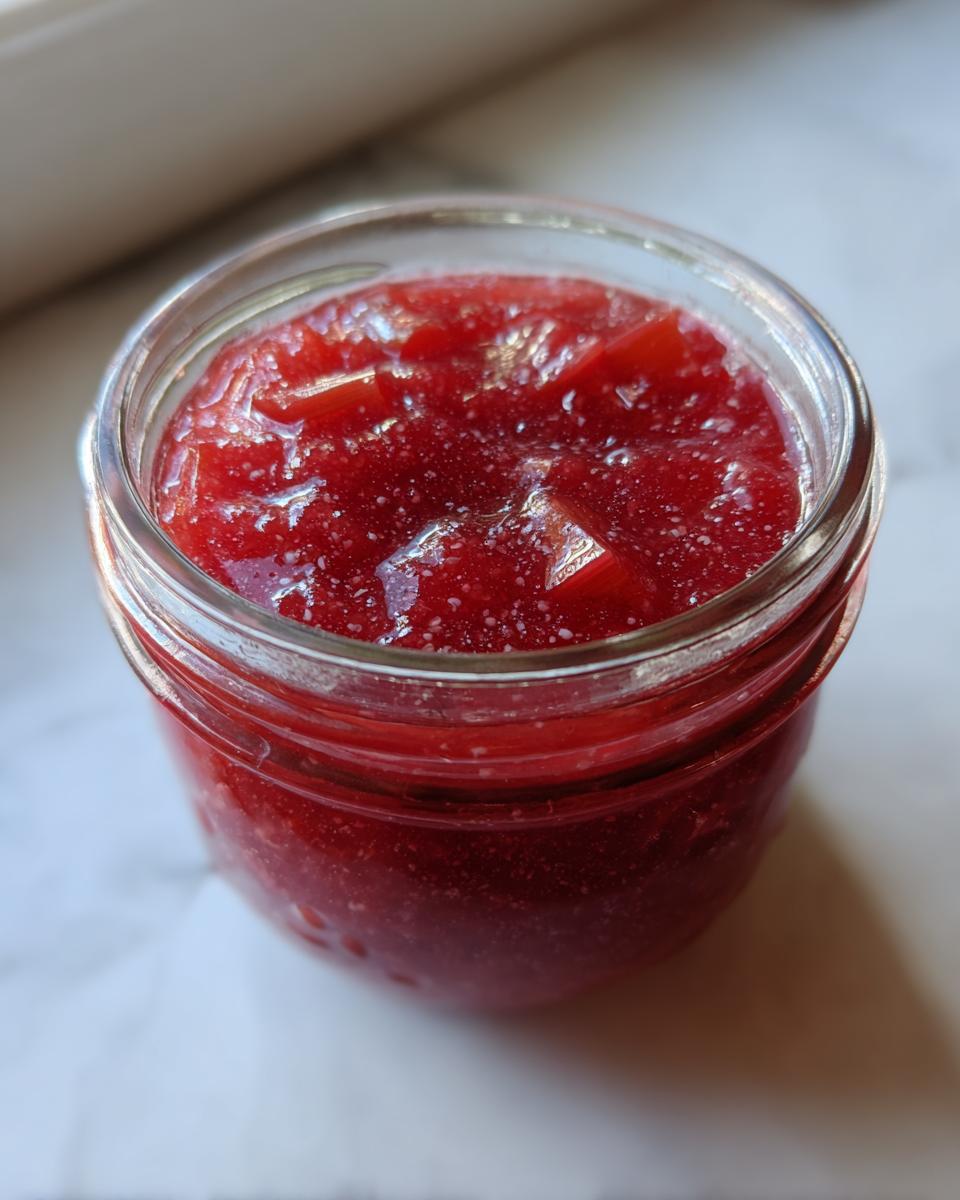
When it comes to **spiced fruit spreads**, everyone has a preference, but for this recipe, we are aiming for a texture that is spoonable but holds its shape momentarily. If you are worried about the set, there’s the ‘cold plate test.’ Before you start cooking, put a small plate or two in the freezer. When you think the jam is done boiling (after that critical one minute!), drop a spoonful onto the cold plate and put it back in the freezer for 30 seconds. Take it out and push the jam with your finger. If it wrinkles up and holds a distinct mound, it’s set! If it’s still runny and spreads instantly, put it back on the heat and boil for another 30 seconds, then test again. We want it to hold its shape slightly, almost like a very loose Jell-O, so it spreads nicely on a biscuit but doesn’t immediately run off the side.
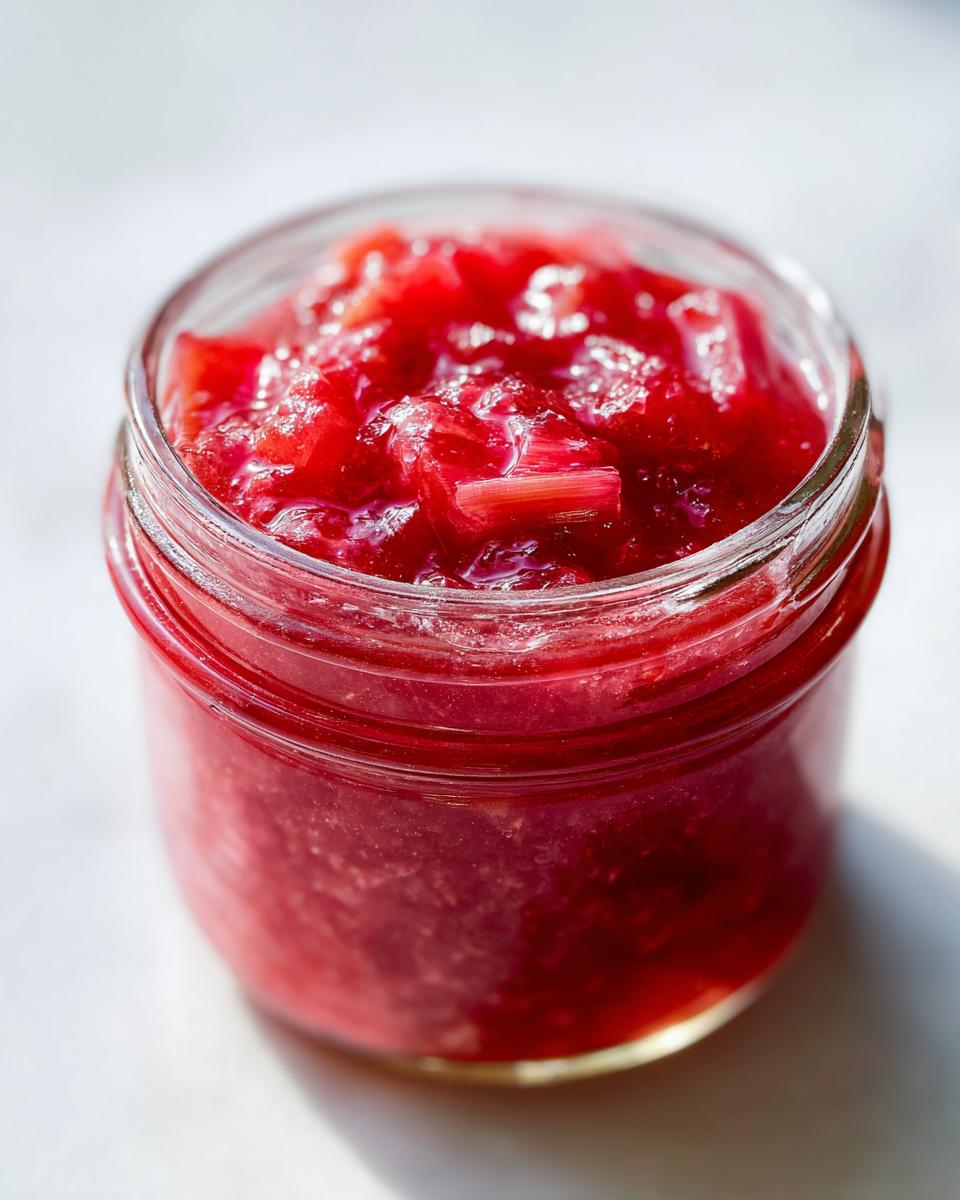
Another thing to consider for texture is the rhubarb itself. This pectin recipe works hard to keep the rhubarb somewhat intact, so expect nice little pieces of fruit, not a complete puree. That’s what makes it so satisfying to spread on your toast—you get the textural difference between the soft fruit and the thick, luscious syrup!
Final Thoughts on Preserving Seasonal Rhubarb
Doesn’t it just fill you with pride knowing you took that tart, seasonal rhubarb and turned it into this incredible **rhubarb cinnamon jam**? Making preserves is such a rewarding way to hold onto summer flavor long after the season ends. Please let me know how your batch turned out! You can rate the recipe or share your favorite jars on social media—I’d truly love to see your work. If you have any last questions, don’t hesitate to reach out through my contact page!
PrintSimple Rhubarb Cinnamon Jam Recipe
Make this easy rhubarb cinnamon jam at home. This recipe uses simple ingredients to create a sweet, tart, and warmly spiced fruit spread perfect for canning or immediate use.
- Prep Time: 20 min plus 2 hours maceration
- Cook Time: 30 min
- Total Time: 2 hours 50 min
- Yield: About 6 half-pint jars 1x
- Category: Preserves
- Method: Stovetop Cooking and Canning
- Cuisine: American
- Diet: Vegetarian
Ingredients
- 2 lbs fresh rhubarb, trimmed and cut into 1/2 inch pieces
- 4 cups granulated sugar
- 1 tablespoon ground cinnamon
- 1/4 cup lemon juice
- 1 package (1.75 oz) powdered fruit pectin
Instructions
- Prepare your canning jars and lids according to standard sterilization procedures. Keep jars hot until ready to fill.
- Combine the cut rhubarb and sugar in a large, heavy-bottomed pot. Let this mixture sit for at least 2 hours, or overnight in the refrigerator, to draw out the juices.
- Place the pot over high heat and bring the mixture to a full rolling boil, stirring often to prevent scorching.
- Add the lemon juice and ground cinnamon to the boiling mixture. Stir well.
- In a small bowl, whisk the powdered fruit pectin with 1/4 cup of cold water until smooth.
- Pour the pectin mixture into the boiling fruit mixture. Stir constantly and bring the jam back to a full, rolling boil that cannot be stirred down. Boil hard for exactly 1 minute.
- Remove the pot from the heat immediately. Skim off any foam from the surface using a metal spoon.
- Carefully ladle the hot jam into the hot, sterilized jars, leaving 1/4 inch headspace.
- Wipe the rims clean, center the lids, and screw on the bands until fingertip tight.
- Process the filled jars in a boiling water bath canner for 10 minutes, adjusting for altitude if necessary.
- Remove jars and let them cool undisturbed on a rack for 12 to 24 hours. Check seals. Store sealed jam in a cool, dark place.
Notes
- For a richer flavor, substitute 1/4 cup of the granulated sugar with light brown sugar.
- If you prefer a jam without added pectin (natural pectin free jam), you can omit the pectin and increase the sugar to 5 cups, cooking until the setting point is reached (around 220 degrees Fahrenheit).
- This recipe works well for small batch jam making if you halve all quantities.
Nutrition
- Serving Size: 2 tablespoons
- Calories: 85
- Sugar: 21
- Sodium: 2
- Fat: 0
- Saturated Fat: 0
- Unsaturated Fat: 0
- Trans Fat: 0
- Carbohydrates: 22
- Fiber: 0
- Protein: 0
- Cholesterol: 0