

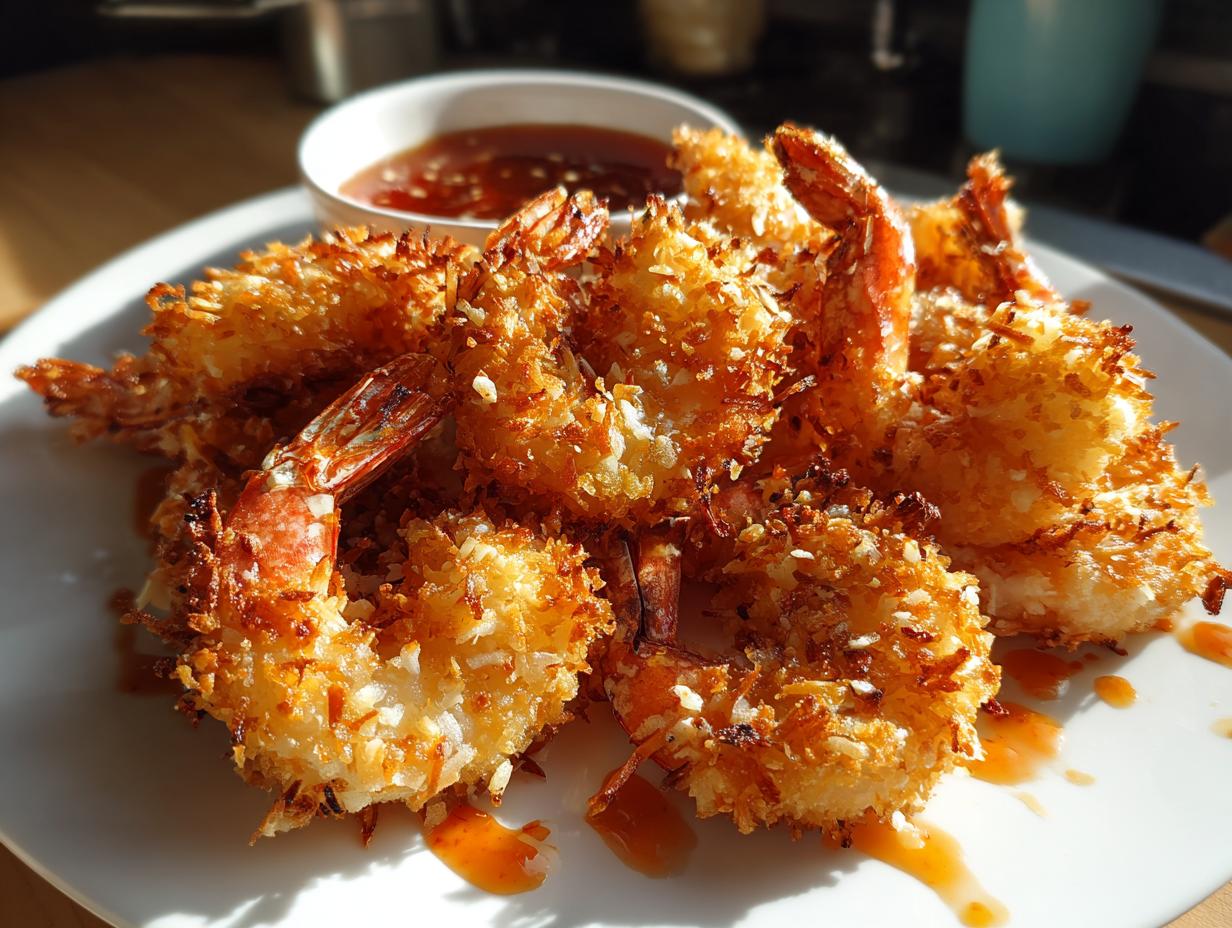
Are you tired of sinking your teeth into soggy seafood, wishing you could recreate that perfect, audible crunch from your favorite restaurant? Me too! That’s why I’m sharing my Ultimate Crispy coconut shrimp recipe. This isn’t just another recipe; it’s the best way to get that restaurant-style crunch right at home, thanks to a little secret weapon I sneak into the coating. As someone who grew up learning the science of food through nutrition but falling in love with the soul of my family’s cooking, I promise this combination of crispiness and tropical sweetness is unbeatable. Get ready for the most satisfying shrimp you’ll ever make!
- Why This is the Best Coconut Shrimp Recipe You Will Make
- Ingredients for Crispy Coconut Shrimp and Dipping Sauce
- Step-by-Step Instructions for Perfect Coconut Shrimp
- Alternative Cooking Methods for Coconut Shrimp
- Tips for Success with Homemade Coconut Shrimp
- Serving Suggestions for Your Tropical Shrimp Dinner
- Storage and Reheating Instructions for Leftover Coconut Shrimp
- Frequently Asked Questions About Coconut Shrimp
- Nutritional Estimates for This Coconut Shrimp Recipe
Why This is the Best Coconut Shrimp Recipe You Will Make
If you’ve been searching for the best coconut shrimp recipe, stop right here, friend. I’ve perfected this one using techniques that make it truly stand out from the rest. It hits every note: it’s incredibly sweet, perfectly savory, and has that satisfying texture you usually only find when you dine out. It’s definitely my go-to for a perfect party shrimp appetizer.
- It doubles easily whether you need a simple coconut shrimp appetizer or a full tropical shrimp dinner.
- It absolutely tastes like restaurant style coconut shrimp—totally over-the-top crunchy! If you love crunch, check out my secret for getting perfectly crisp fried pickles, too!
- It’s quick! We can go from raw shrimp to plating in under 35 minutes, which is great news for weeknight cooking.
Achieving Maximum Crunch with Panko Coconut Shrimp
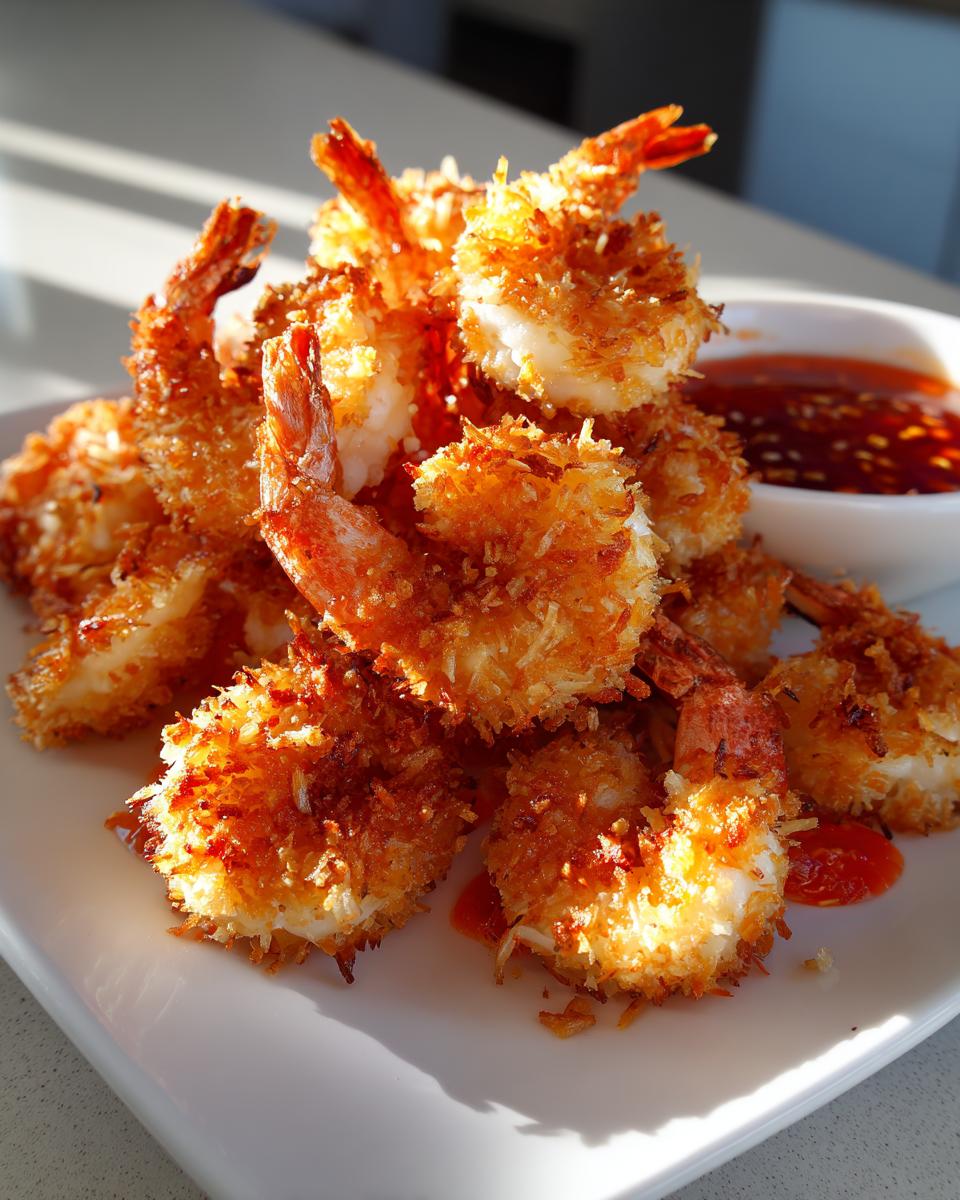
So, what’s the secret to that amazing crunch? It’s that delightful push-pull between the sweetness of the shredded coconut and the heft of the Panko breadcrumbs. Plain coconut can sometimes soften up too fast, but the Panko adds sharp, irregular edges that crisp up beautifully when fried. Trust me, once you use Panko, you won’t go back!
Ingredients for Crispy Coconut Shrimp and Dipping Sauce
Okay, gathering what we need is half the battle won. When I put together my ingredient list for this homemade coconut shrimp, I make sure everything is ready to go before I even touch the shrimp. Remember, shrimp cook fast, so we need our breading station organized like a well-oiled machine. If you’re planning on making a bigger batch for a party, just double this list—it scales beautifully!
I always keep my pantry stocked with Panko because you never know when you’ll need that extra crunch. And if you’re ever looking for something amazing to pair with this—maybe after you’ve made some homemade garlic butter for something else—this recipe is still the star!
For the Ultimate Coconut Shrimp Coating
This is where the magic starts! You need three bowls, lined up, ready for action. Don’t forget to pat your shrimp totally dry first—that’s critical, or the flour won’t stick!
- 1 lb large shrimp, peeled and deveined (Make sure those tails are off unless you like them on for dipping handles!)
- 1 cup all-purpose flour
- 2 large eggs, lightly beaten
- 1 cup sweetened shredded coconut
- 1 cup Panko breadcrumbs (Don’t skimp on these!)
- 1 teaspoon salt
- 1/2 teaspoon black pepper
- Vegetable oil, for frying (We need enough for about 1 to 1.5 inches deep)
Simple Sweet Chili Dipping Sauce Ingredients
This sauce is so easy, you’ll wonder why you ever bought it bottled. It brings that perfect sweet heat contrast to our rich, crispy shrimp.
- 1/2 cup sweet chili sauce (The store-bought stuff is perfectly fine here!)
- 1 tablespoon rice vinegar
- 1 teaspoon lime juice
Step-by-Step Instructions for Perfect Coconut Shrimp
This is it—the fun part! You’ve got your ingredients ready, your oil is heating up, and soon you’ll smell that incredible aroma filling your kitchen. Don’t rush this! We take our time setting up the station so the cooking part can be lightning fast. The secret to great coconut shrimp is making sure every layer adheres perfectly before it hits the hot oil. I always feel like I’m doing an assembly line, and honestly, if you follow these steps, you’ll have a beautiful spread ready in minutes. These shrimp are meant to be an amazing party snack!
Preparing the Shrimp and Breading Station for Coconut Shrimp
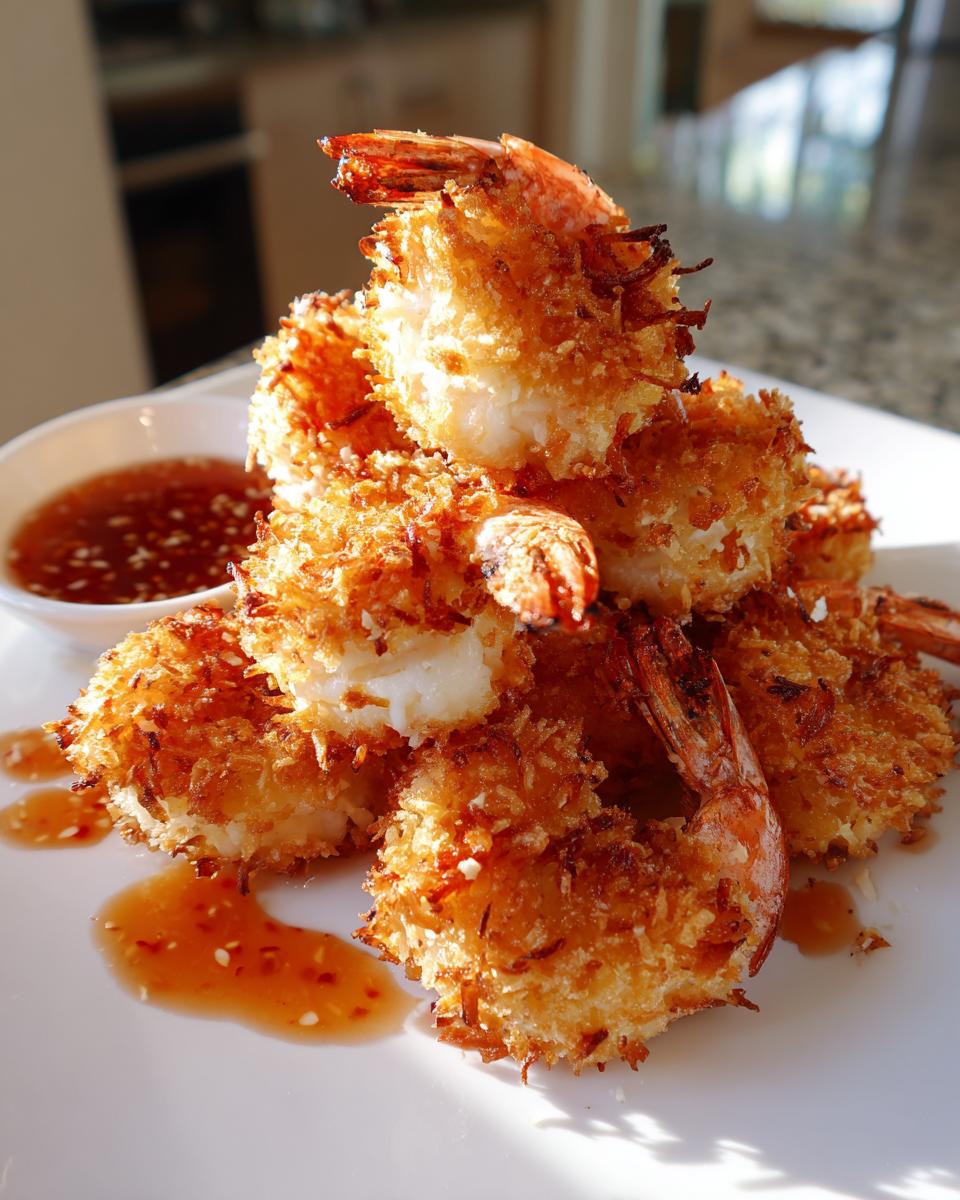
First things first: take those beautiful peeled shrimp and pat them down with paper towels until they feel completely dry. Seriously, this is the thing folks skip, and then the coating slides right off! Set up your three dishes in a line. Dip an unseasoned shrimp first into your seasoned flour—tap off the excess. Next, dunk it into the beaten egg wash. Finally, and this is important, press that egg-coated shrimp firmly into the coconut-Panko bowl. You wanna really use your fingers to pack that crunchy coating on there. Set the coated babies on a baking sheet for a minute before frying.
Making the Sweet Chili Dipping Sauce
While the oil is warming up toward 350°F, let’s whip up the dip. Honestly, it takes about 30 seconds. Just grab a small bowl and whisk together your 1/2 cup of sweet chili sauce, the tablespoon of rice vinegar, and the lime juice. Give it a little taste. It should be tangy and sweet. Done! Set it aside while you fry.
Cooking Your Crispy Coconut Shrimp (Frying Method)
When your oil hits that happy temperature of 350°F (175°C), it’s showtime! Don’t dump a million shrimp in there at once, or the temperature will crash and you’ll get soggy shrimp. Work in small batches. Let them fry for just 2 to 3 minutes on one side until they are gorgeous and golden. Flip them gently, cook the other side for another 2 minutes. You’ll know they’re done when they look like little golden treasures!
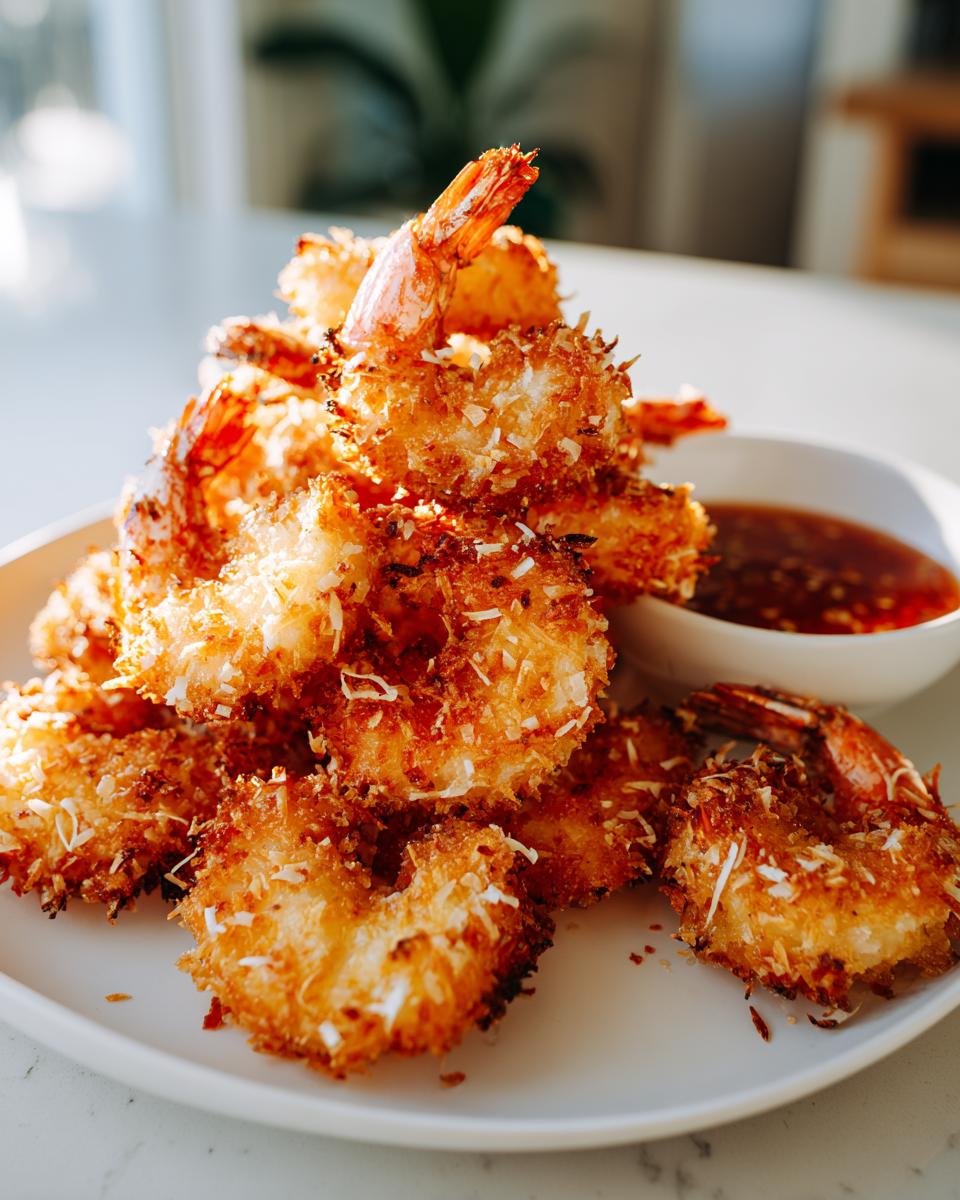
Use a slotted spoon to pull them out and move them straight onto a wire rack set over paper towels. This lets the air circulate underneath, which keeps the bottom from steaming. I’ve got a few tricks to keep them crispy even if you want leftover chocolate syrup to dip them in—wait, no, stick to the chili sauce for now!
Alternative Cooking Methods for Coconut Shrimp
I know, I know. Frying up a golden batch of these beauties is pure joy, but sometimes we need something a little lighter—maybe for a more virtuous air fryer fried chicken night, or just because we’re trying to keep things healthier! The good news is that this crunchy coating holds up beautifully in the oven and the air fryer, too. You still get that amazing tropical flavor without filling up on quite so much oil.
If you’re looking for baked coconut shrimp, don’t fret. It’s really simple, but you have to treat them a bit differently than the fried ones. You need them spread out so the hot air can circulate! If you already love what a machine can do for your potatoes, you’ll love this air fryer shrimp recipe.
Here’s how you switch gears:
- Baking Approach: Preheat your oven to a hot 400°F (200°C). After you coat the shrimp and set them on a wire rack (this is key, just like frying, to keep the bottom from getting soggy!), bake them for about 12 to 15 minutes. You need to flip them carefully halfway through so both sides turn lovely and gold.
- Air Fryer Power: For the quickest, least messy option, use your air fryer! Preheat it to 375°F (190°C). Since these shrimp cook so quickly here, you only need about 8 to 10 minutes total. Give that basket a little shake halfway through your cooking time for even browning.
While baking or air frying won’t give you that deep, rich color that frying does, following these tips ensures you still get a wonderfully crisp bite without the added fat. It’s just as delicious if you serve it alongside my crispy potato wedges!
Tips for Success with Homemade Coconut Shrimp
Even with the best recipe in hand, sometimes our delicious creations don’t behave exactly like we planned! As someone who spent years learning the science behind food preparation, I can tell you that mastering the little details is what separates a good batch of coconut shrimp from an absolutely legendary one. Don’t worry if your first attempt isn’t perfect; we figure out the hiccups together. We need these shrimp to be golden and stay that way!
My number one piece of advice, which I’ve mentioned before but can’t stress enough, is moisture control. If the shrimp is wet, the dredge won’t stick, and you end up with sad little clumps of coconut floating in the bottom of your oil instead of a beautifully coated shrimp. And if you need a great appetizer dip to go with these, check out my recipe for the best garlic bread dip—wait, no, okay, stick to the tropical theme for now!
Troubleshooting: Keeping Your Coconut Shrimp Crispy
Let’s address the common issues head-on so you can serve up shrimp that look exactly like the pictures.
- Coating Falling Off: This 99% of the time comes down to not drying the shrimp enough, or rushing the dredging process. When you press the shrimp into that Panko and coconut mixture, you really need to commit! Press it firmly. If you are finding layers separating while frying, it means your flour dredge wasn’t thick enough to hold the egg; make sure you shake off the excess flour but leave a nice dusty film on there before moving to the egg.
- Shrimp Not Cooked Through: Shrimp cooks incredibly fast, which is wonderful, but it means we can easily burn the exterior while leaving the center raw. If your oil temperature drops too low—say, below 340°F—the breading soaks up the oil and gets greasy, not crisp, and the shrimp won’t cook properly inside. Make sure your oil is at that perfect 350°F mark before you start!
- Soggy Bottoms: This is why I always insist on a wire rack, not just paper towels! Paper towels absorb the oil fine, but they trap steam right against the bottom of the hot shrimp. A wire rack allows the air to circulate completely around the piece, keeping the base just as crisp as the top. If you’re already looking up other great seafood recipes, check out this crunchy coconut shrimp recipe if you want another perspective!
When you pull them out, remember the goal: Drain them fast, serve them faster. These are best enjoyed piping hot!
Serving Suggestions for Your Tropical Shrimp Dinner
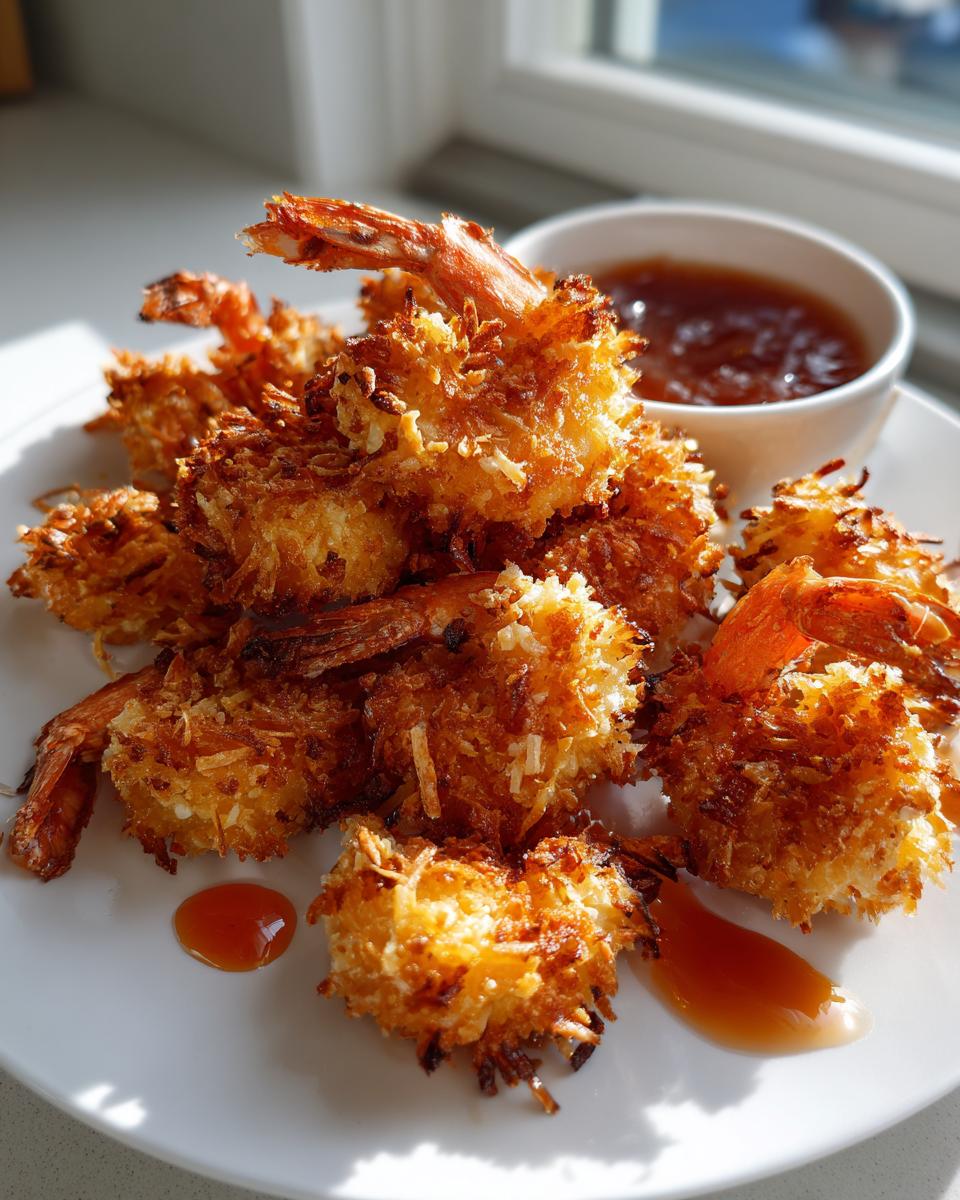
Now that you’ve got the crunchiest, most delicious coconut shrimp imaginable, we have to talk about how to serve these showstoppers! Whether you are setting them out as an easy party shrimp appetizer or making them the star of a light tropical shrimp dinner, presentation really matters. The wonderful thing about this recipe is that they are perfectly balanced—sweet from the coconut, savory from the shrimp—so they pair well with so many things, from fresh salads to simple rice.
For a light, easy dinner spread, I love serving a big platter of these alongside something cool and refreshing, like my favorite cucumber tomato salad. If you’re serving them as an appetizer, keep things simple so guests can focus on dipping!
Dipping Sauce Variations Beyond Sweet Chili
While the sweet chili sauce we whipped up earlier is absolutely divine—that tangy heat is perfection—sometimes you want something even more tropical, right? I always make a second bowl of dip because you know how quickly a crowd drains the first one! This is where that homemade mango sauce comes into play, and trust me, it’s a game-changer.
You don’t even need a recipe to make the tropical shrimp dinner dip truly sing. Just grab about 1 cup of fresh or even frozen mango chunks (no need to thaw them completely if you’re in a hurry). Pop those mangoes into your blender, add about 1 tablespoon of honey for a little extra sweetness, and then add just a splash of water—maybe a tablespoon to start—to get the blades moving. Blend it all up until it’s completely smooth like a puree. You might need another tiny splash of water if it seems too thick, but remember, you want it thick enough to really coat the shrimp.
This mango option is brighter and fruitier than the sweet chili, which gives people a delicious choice. For those who prefer classic sides, piling these shrimp next to a scoop of my classic creamy red potato salad makes for a fantastic summer meal!
Storage and Reheating Instructions for Leftover Coconut Shrimp
I’ll be honest, getting any leftover coconut shrimp is rare in my house because these disappear so fast! But sometimes, blessedly, there are one or two stragglers left over from a big party or dinner. The last thing you want to do is ruin that incredible, hard-earned crunch with the wrong reheating method. Trust me when I say we need to save these crispy little gems!
The microwave is absolutely your enemy here. I know it’s fast, but it steams the shrimp and turns that gorgeous Panko crust into rubbery sadness. Don’t do it! If you’re planning ahead, you can even make the dipping sauce—like the great ice cream cake—ahead of time and keep it chilled.
If you are lucky enough to have leftovers, here is what you do to bring that crisp back to life.
The Wire Rack Rule Applies to Leftovers Too!
Whether you’re storing them for a day or reheating them right away, keep them out of a sealed plastic bag or airtight container for too long in the fridge. The moisture trapped inside will turn that crispy crust soft. If you must store them, use a container lined with a paper towel (but change that towel if it gets damp!), and try to eat them within two days.
When it comes time to reheat, aim for dry heat. Pop your leftover shrimp onto a wire rack set over a baking sheet—yes, the same rack we used for draining earlier! Putting them directly on the pan traps steam again, and we’re fighting for crispiness here!
Reheating for Maximum Crisp
You have two choices, and both are much better than the microwave:
- Oven Method: Set your oven to 350°F (175°C). Bake the shrimp for about 8 to 10 minutes. Keep an eye on them! They are already fully cooked, so you are just warming them through and drying out that coating again.
- Air Fryer Method: This is my favorite way to revive them if you have an air fryer. Set it to 375°F (190°C) and cook for just 3 to 5 minutes. It gets them hotter, faster, and seems to make the Panko pop right back to life.
Serve immediately with fresh dipping sauce. You want to enjoy that tropical flavor right away! If you enjoyed this quick cleanup tip, you might also like the one I shared on making crispy shrimp dips over at The Whisk Way—it’s a fun contrast to this main dish!
Frequently Asked Questions About Coconut Shrimp
I know the frying part can sometimes make folks nervous, or maybe you’re just wondering about substitutions. That’s totally normal! When you’re making something like this classic crunch that you want to be perfect, it’s good to get clarity on the details. I’ve gathered up some of the questions I get most often about making this coconut shrimp recipe the absolute best version possible. I’m happy to share what I’ve learned over the years of making countless batches!
Can I make this an easy coconut shrimp recipe using frozen shrimp?
You absolutely can, and sometimes that’s just the ticket when you need a quick shrimp dinner idea! The most important thing you must do is thaw them completely first. Don’t try to bread them partially frozen, or you’ll end up with a mess. Once they are fully thawed, you still need to treat them exactly like fresh shrimp: Pat them down relentlessly with paper towels! If there is surface moisture, that flour won’t stick, and your beautiful coating will slide right off into the oil. Take your time with the drying step; it’s essential for that crispy coconut shrimp coating.
What is the best oil for frying coconut shrimp?
When it comes to deep frying, we need an oil that can handle the heat without smoking up your kitchen or tasting funny. You want a good, neutral oil with a high smoke point. I usually reach for vegetable oil or canola oil because they are inexpensive and they do the job perfectly without overpowering the sweet coconut flavor. Anything that you know handles deep frying well is great. Remember, we target 350°F for frying; if the oil is too low, the shrimp wallows and gets greasy. If you’re already planning your next great seafood dish, maybe try my creamy seafood pasta next week!
If you’re looking for an alternative that keeps them tender yet still cooks through, remember to check out the baking and air fryer times above. Both those methods are great ways to enjoy this recipe if you want a slightly lighter result!
Nutritional Estimates for This Coconut Shrimp Recipe
Look, I love that this coconut shrimp tastes like a tropical vacation, but since I spent years studying nutrition, I can’t just hand over a recipe without giving you the full picture, right? So, here’s the deal: these numbers are estimates, based on using the ingredients listed above (specifically the fried version, not the baked one!). Think of this as a good guide so you can plan the rest of your meal, maybe pairing it with some of my healthy breakfast ideas… if you count this as a very indulgent breakfast!
It’s always important to remember that deep-frying does change the fat content compared to other methods, but the protein from the shrimp is still fantastic, and honestly, the joy it brings is nutritionally sound for the soul!
- Serving Size: 4 shrimp (That’s just a small appetizer portion, so be warned, this stuff is addictive!)
- Calories: Approximately 320 per serving
- Fat: 18g total (Keep in mind 10g of that is saturated fat from the frying oil and coconut)
- Carbohydrates: 24g
- Protein: 17g
- Sugar: 14g (This comes mostly from the sweetened coconut and the dipping sauce, so it’s a sweet treat!)
- Sodium: 450mg
- Cholesterol: 135mg
If you are looking to dial back the sugar or fat content, you can skip the sweetened coconut and use unsweetened coconut flakes—just add a tiny pinch more salt to the flour mix to compensate for the flavor loss. Enjoy those golden beauties responsibly!
PrintUltimate Crispy Panko Coconut Shrimp with Sweet Chili Dipping Sauce
Make restaurant-style crispy coconut shrimp at home. This recipe uses Panko breadcrumbs for maximum crunch, perfect as a party appetizer or a tropical dinner main dish.
- Prep Time: 20 min
- Cook Time: 15 min
- Total Time: 35 min
- Yield: 4 servings 1x
- Category: Appetizer
- Method: Frying
- Cuisine: American
- Diet: Vegetarian
Ingredients
- 1 lb large shrimp, peeled and deveined
- 1 cup all-purpose flour
- 2 large eggs, lightly beaten
- 1 cup sweetened shredded coconut
- 1 cup Panko breadcrumbs
- 1 teaspoon salt
- 1/2 teaspoon black pepper
- Vegetable oil, for frying
- For the Sweet Chili Dipping Sauce: 1/2 cup sweet chili sauce
- 1 tablespoon rice vinegar
- 1 teaspoon lime juice
Instructions
- Prepare the shrimp: Pat the shrimp completely dry using paper towels. This step helps the coating stick.
- Set up a standard three-stage breading station. Place flour seasoned with salt and pepper in the first shallow dish. Whisk the eggs in the second dish. In the third dish, combine the shredded coconut and Panko breadcrumbs.
- Dredge each shrimp first in the flour mixture, shaking off any excess. Dip the floured shrimp into the egg wash, allowing excess to drip off. Finally, press the shrimp firmly into the coconut-Panko mixture to coat thoroughly. Place coated shrimp on a baking sheet.
- Prepare the dipping sauce: In a small bowl, whisk together the sweet chili sauce, rice vinegar, and lime juice until combined. Set aside.
- Cook the shrimp: Pour about 1 to 1.5 inches of vegetable oil into a deep skillet or Dutch oven. Heat the oil to 350°F (175°C).
- Fry the coconut shrimp in batches, ensuring you do not overcrowd the pan. Fry for 2 to 3 minutes per side, until golden brown and crispy.
- Remove the cooked shrimp with a slotted spoon and place them on a wire rack set over a paper towel-lined plate to drain excess oil.
- Serve your homemade coconut shrimp immediately with the prepared sweet chili dipping sauce.
Notes
- For a healthier option, you can bake these shrimp at 400°F (200°C) for 12-15 minutes, flipping halfway, or use an air fryer at 375°F (190°C) for 8-10 minutes until golden.
- To achieve the best crunch, make sure your oil temperature is correct before frying.
- If you prefer a tropical mango sauce, blend 1 cup of fresh or frozen mango chunks with 1 tablespoon of honey and a splash of water until smooth.
Nutrition
- Serving Size: 4 shrimp
- Calories: 320
- Sugar: 14g
- Sodium: 450mg
- Fat: 18g
- Saturated Fat: 10g
- Unsaturated Fat: 8g
- Trans Fat: 0g
- Carbohydrates: 24g
- Fiber: 1g
- Protein: 17g
- Cholesterol: 135mg